
In de Land ob Cotton: Dan Emmett’s Famous Song
By Stephen Davis · Originally published September 2022 · pp. 30–31
In de Land ob Cotton: Dan Emmett’s Famous Song
by Stephen Davis I’m trying to remember where I read some observer’s only half-jestful comment about the difference between “The Battle Hymn of the Republic” and “Dixie.” If one were to look at the lyrics, and measure them for their power to sustain soldiers’ idealism in wartime, why, no wonder the North won the Civil War. I was once on a panel, and we were asked why the Yankees won. My answer: “they had a better song.” (Laughter.) Yet, for good or ill, “Dixie” is still the song that best conveys to most people images and feelings about the Old South and its War for Independence. As Richard Barksdale Harwell claims in Confederate Music (1954), “Dixie” is the closest thing to a national song the Confederacy had. Its lyrics may not have the lofty ring of Julia Howe’s, but, with the tune, they stir up a lot of excitement. Henry Hotze, Confederate soldier and later propagandist, writing in Norfolk in May of ’61, commented on the power of “Dixie”: It is marvellous with what wild-fire rapidity this tune of “Dixie” has spread over the whole South….What magic potency is there in those rude, incoherent words, which lend themselves to so many parodies, of which the poorest is an improvement on the original? What spell is there in the wild strain that it should be made to betoken the stern determination of a nation to achieve its independence? I cannot tell.1
Old Missus marry Will de Weaber, William was a gay deceaber; When he put his arm around ‘er, He look as fierce as a forty pounder. Chorus-Hooray! Hooray!! &c His face was sharp like a butchers cleaber. But dat did not seem to greab ‘er; Will run away missus took a decline, O’ Her face was de color ob bacon rhine. O’ Chorus Hooray! hooray! &c
You probably know the origin of the tune: how Daniel Decatur Emmett, performer and songwriter for Bryant’s Minstrels, wrote it in New York in 1859 as a “walk around” for his troupe.* It was a hit, spread by minstrel shows through North and South. Music publisher P. P. Werlein of New Orleans brought out the first Southern edition in 1861. Confederate soldiers carried it to the front, and bards behind the lines wrote their own war-lyrics to fit the melody. Albert Pike, Confederate general and parttime poet, fashioned the most popular of these lyrical substitutes, titled “Southrons, Hear Your Country Call You,” whose opening lines trill, “Southrons, hear your country call you! Up! lest worse than death befall you!” Then came the chorus: Advance the flag of Dixie! Hurrah! Hurrah! For Dixie’s land we take our stand, And live or die for Dixie! To arms! To arms! And conquer peace for Dixie! To arms! To arms! And conquer peace for Dixie!2
While missus libbed she libbed in clover. When she died she died all ober; How could she act such a foolish part, O’ An marry a man to break her heart. O’ Chorus Hooray! hooray! &c Buck-wheat cakes an stony batter, Makes you fat or a little fatter; Here’s a health to de next old missus, An all de galls dat wants to kiss us. Chorus Hooray! hooray! &c Now if you want to drive ‘way sorrow, Come an hear dis song to-morrow; Den hoe it down an scratch yer grabble, To Dixies land I’m bound to trabble Chorus Hooray! hooray! &c
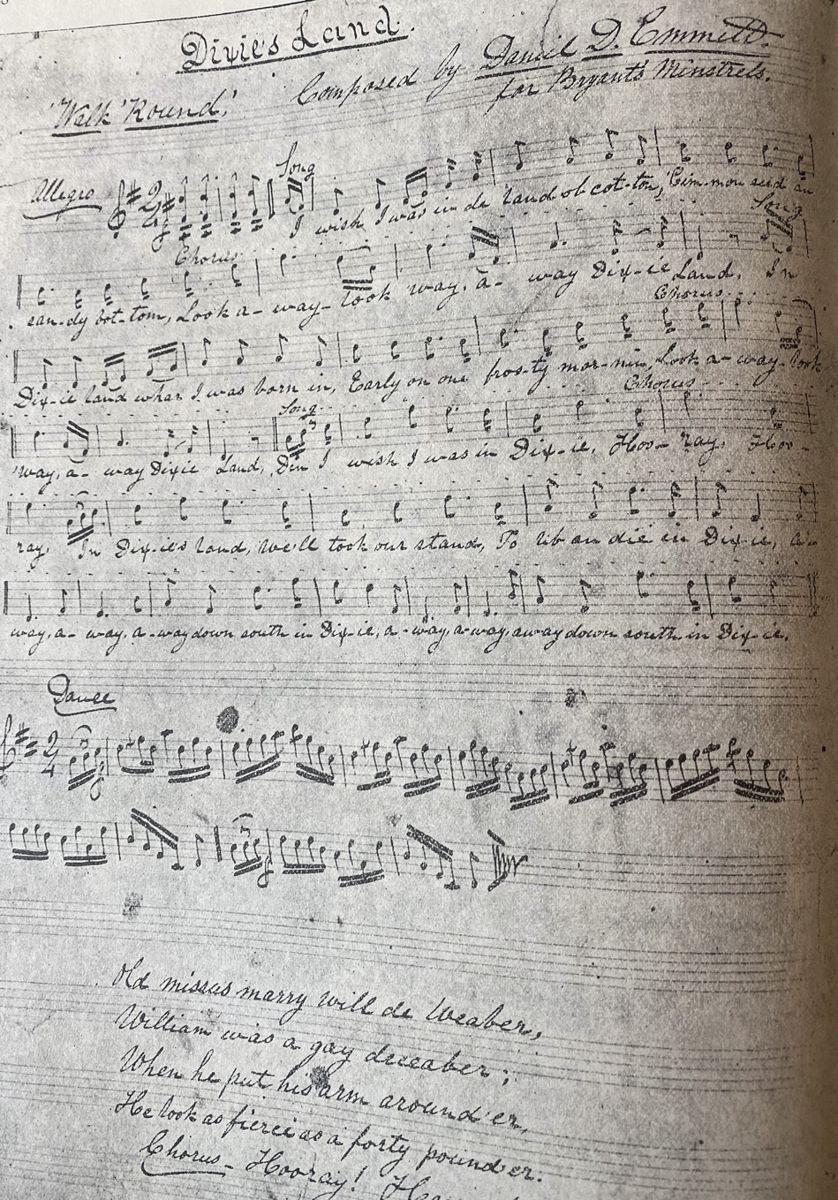
With all of these stray lyrics floating around, Emmett’s original words have become obscure. Confederate Veteran Magazine in September 1895 reproduced the original manuscript, which Emmett lent Veteran publisher S. A. Cunningham. We reproduce: 1859 Dixie’s Land. ‘Walk ‘Round.’ Composed by Daniel D. Emmett.
For Bryant’s Minstrels. Chorus: I wish I was in the land ob cot-ton, Cim-mon seed an san-dy bot-tom, Look a-way—look ‘way, a-way Dix-ie Land. In Dix-ie land whar I was born in, Early on one fros-ty mor-nin, Look a-wayLook ‘way, a-way Dixie Land. Den I wish I was in Dix-ie, Hoo-ray, Hooray. In Dixie’s Land, we’ll took our stand, To lib an die in Dixie, Away, a-way, a-way down south in Dix-ie, a-way, a-way, a-way down south in Dixie.3 Confederate Veteran even published the handwritten note sent by the composer to Cunningham three decades after the war:
Mt. Vernon. Knox Co. O. July 31st 1895.
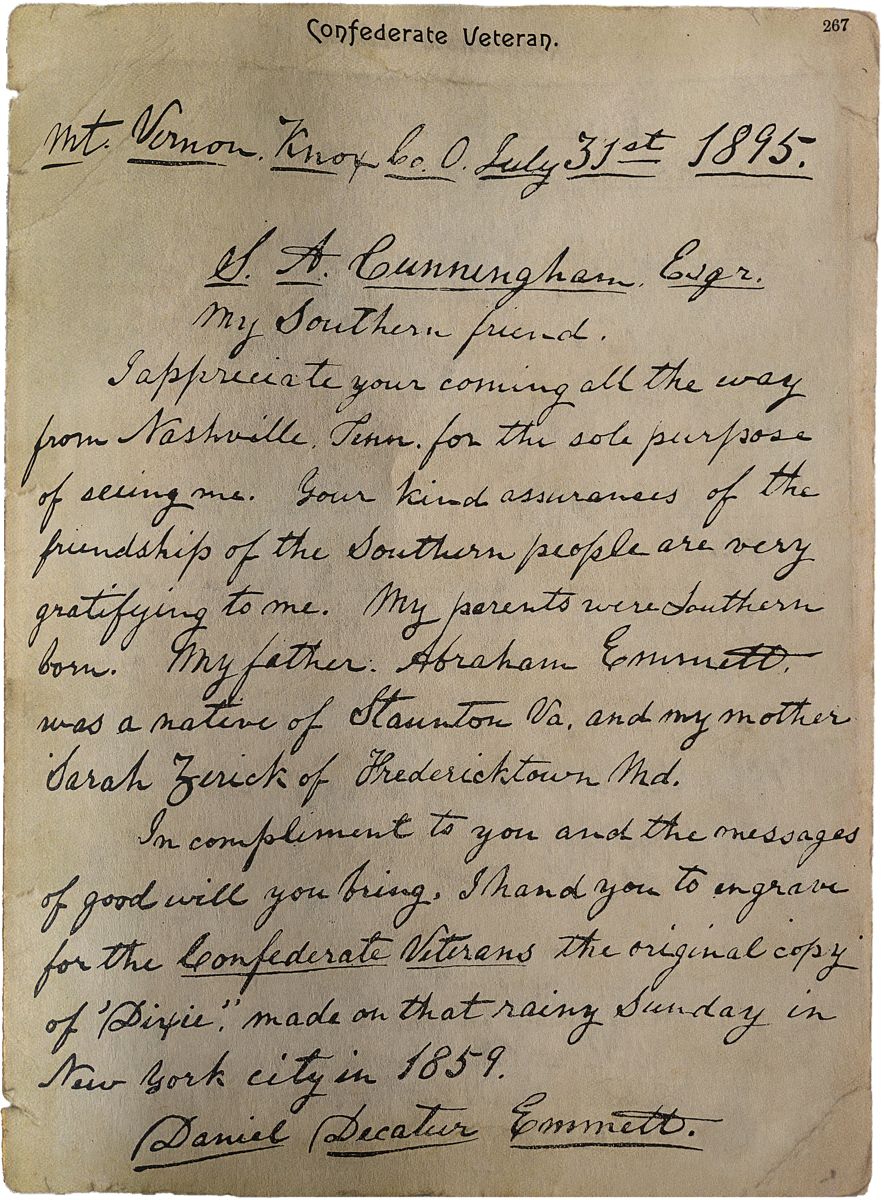
S. A. Cunningham, Esqr.
My Southern friend. I appreciate your coming all the way from Nashville, Tenn, for the sole purpose of seeing me. Your kind assurances of the friendship of the Southern people are very gratifying to me. My parents were Southern born. My father, Abraham Emmett, was a native of Staunton Va., and my mother Sarah Zerick of Frederickton Md. In compliment to you and the messages of good will you bring, I hand to you to engrave for the Confederate Veterans the original copy of ‘Dixie,” made on that rainy Sunday in New York city in 1859. Daniel Decatur Emmett.3
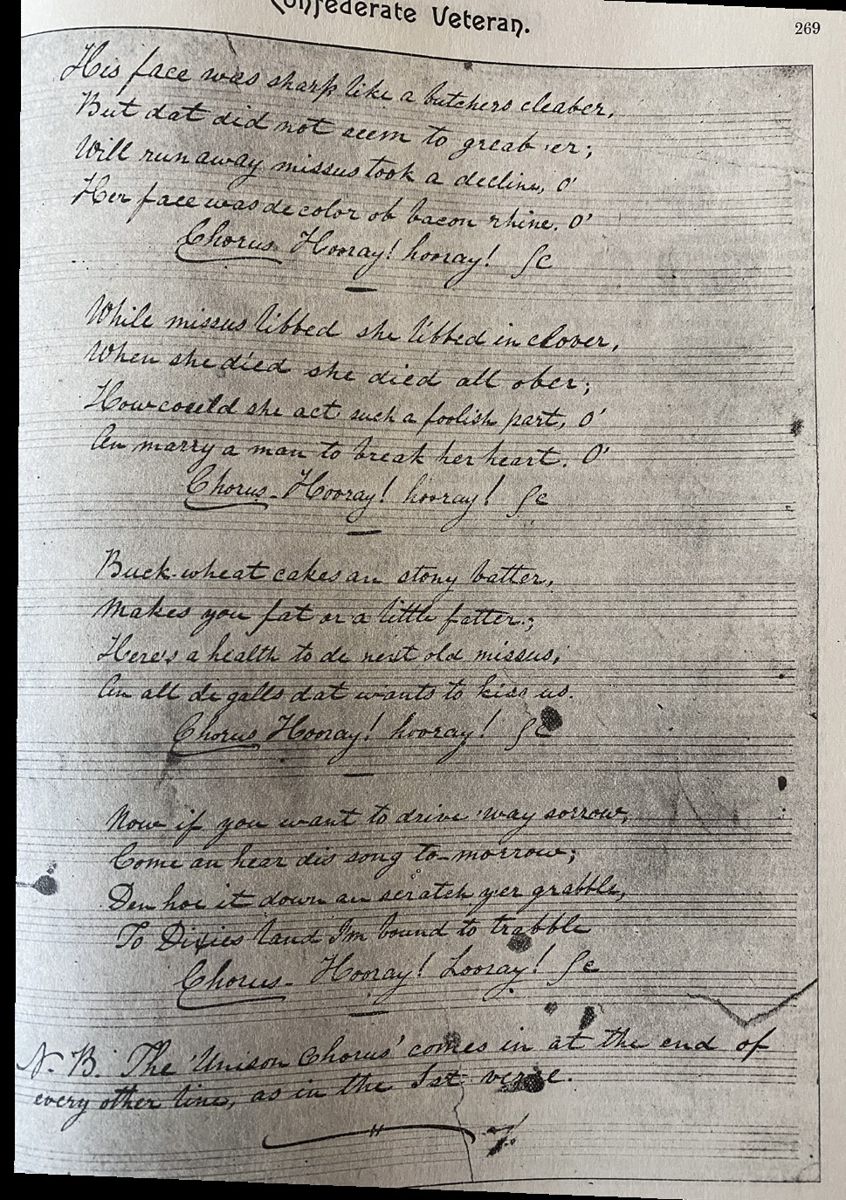
That “rainy Sunday” story merits elaboration. Jerry Bryant had a minstrel group that in 1859 was performing on Broadway in New York City. One of its performances on a Saturday night drew such apathetic audience response that he turned to one of his minstrels, Dan Emmett, and asked him to write a new, lively tune, a “walk-around” or “hooray” song. And Mr. Bryant wanted it for Monday night’s performance.4 So it was on that busy, rainy Sunday in New York that Emmett composed his tune and lyrics, the rest of which read:
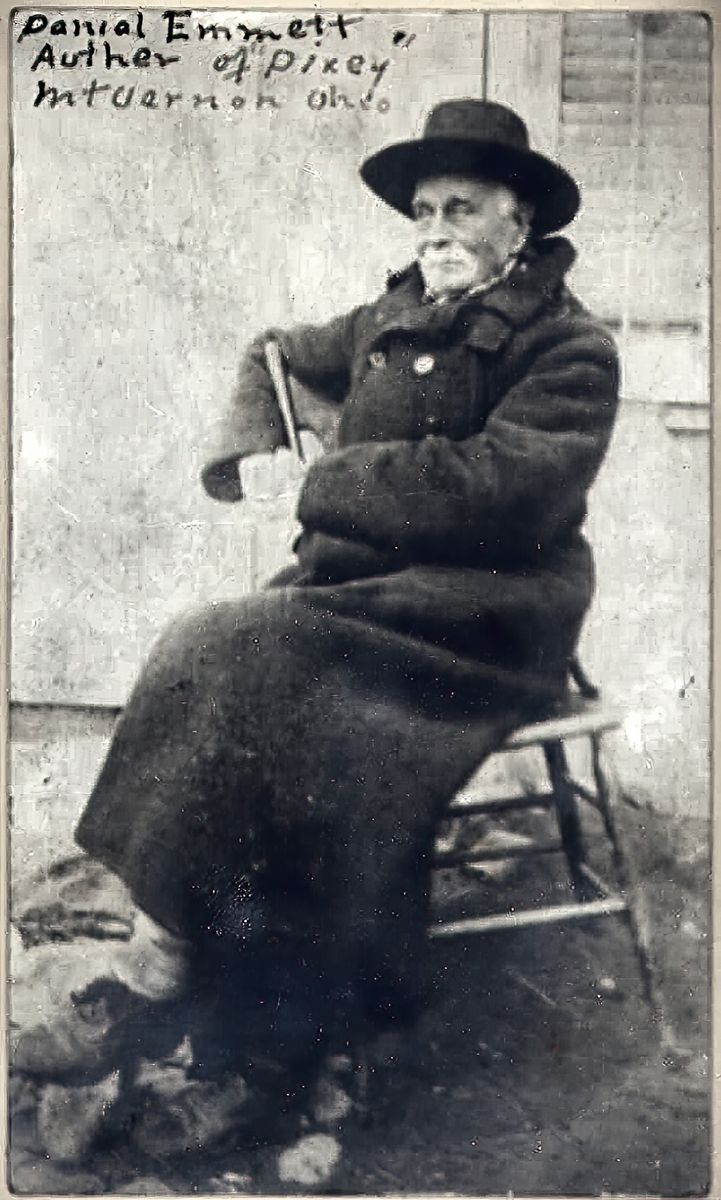
Daniel Decatur Emmett, circa 1900. (WikiCommons)
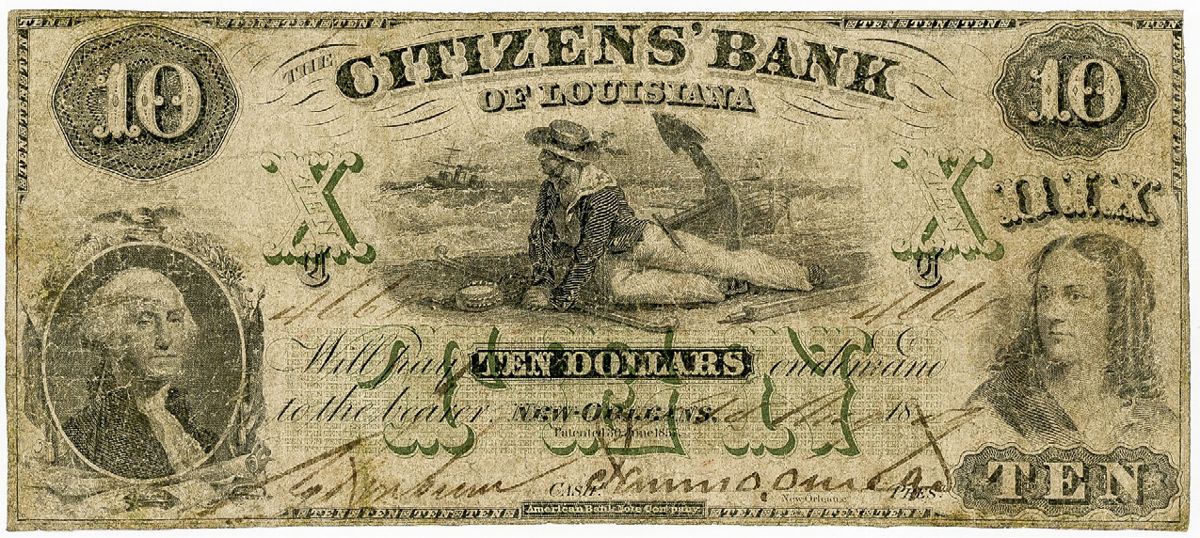
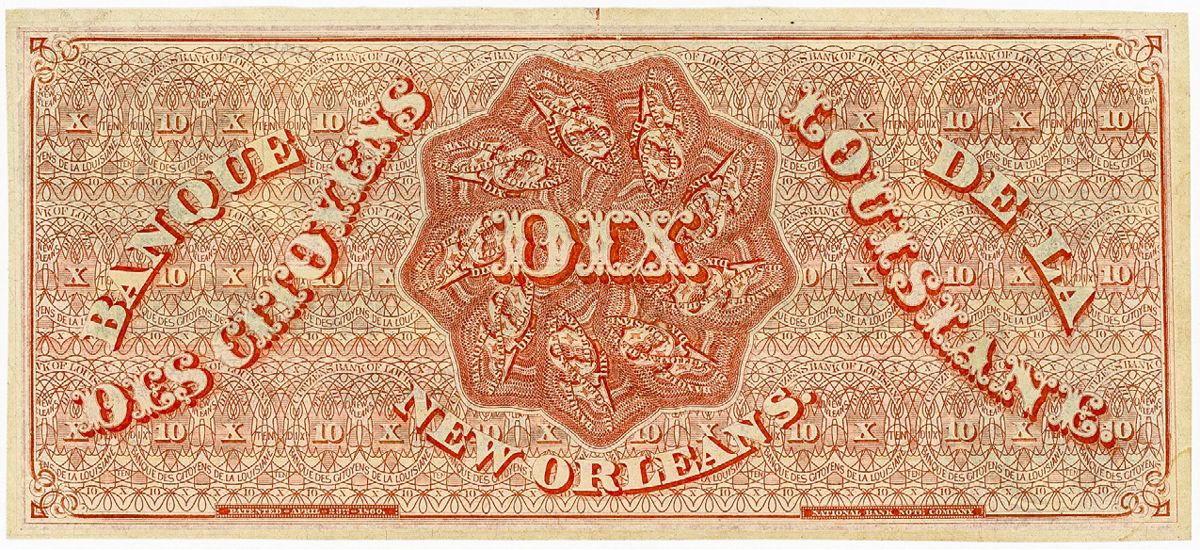
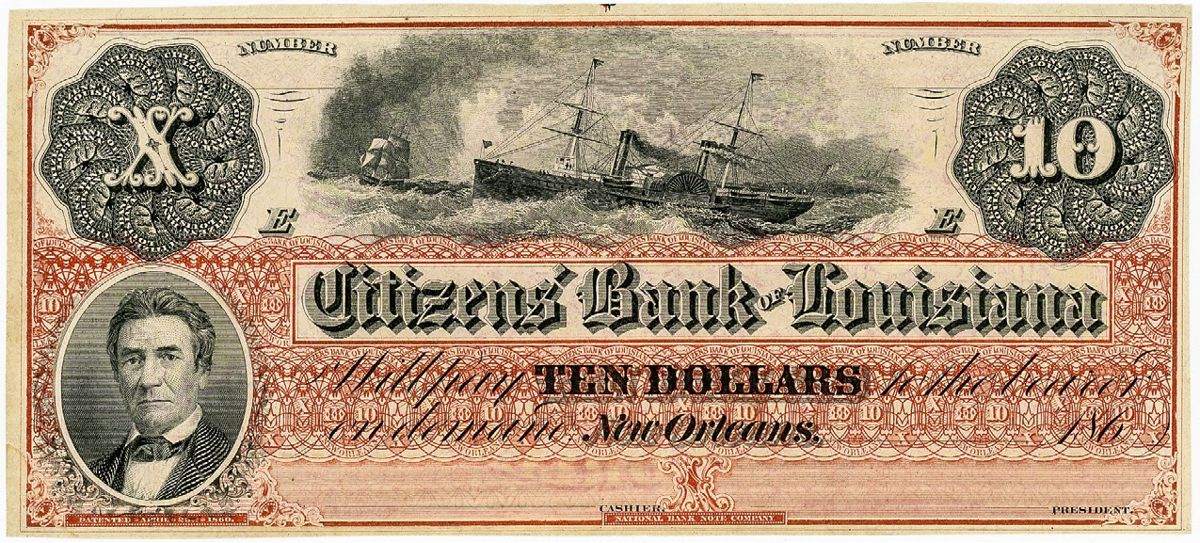
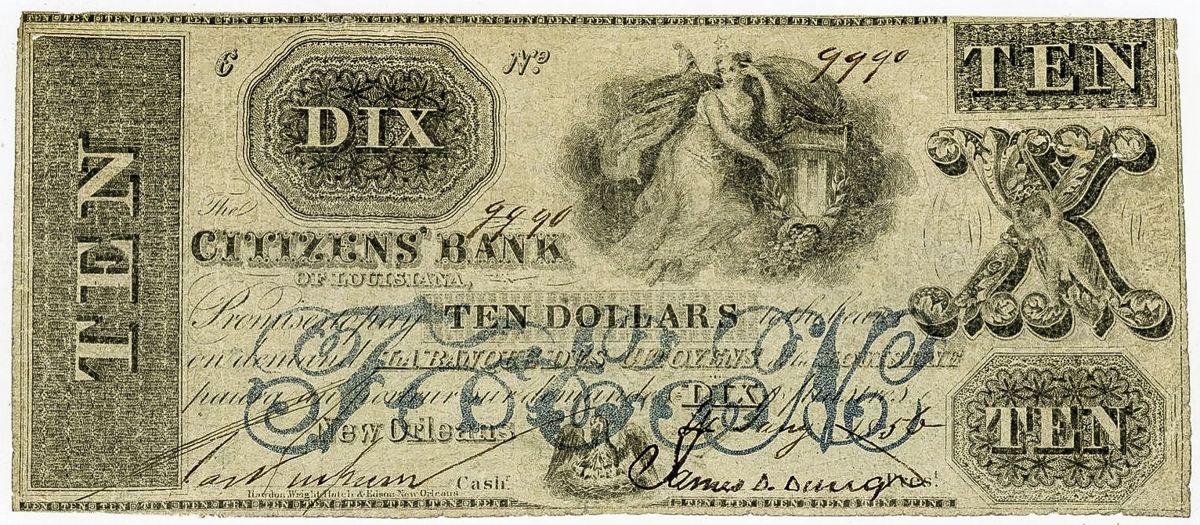
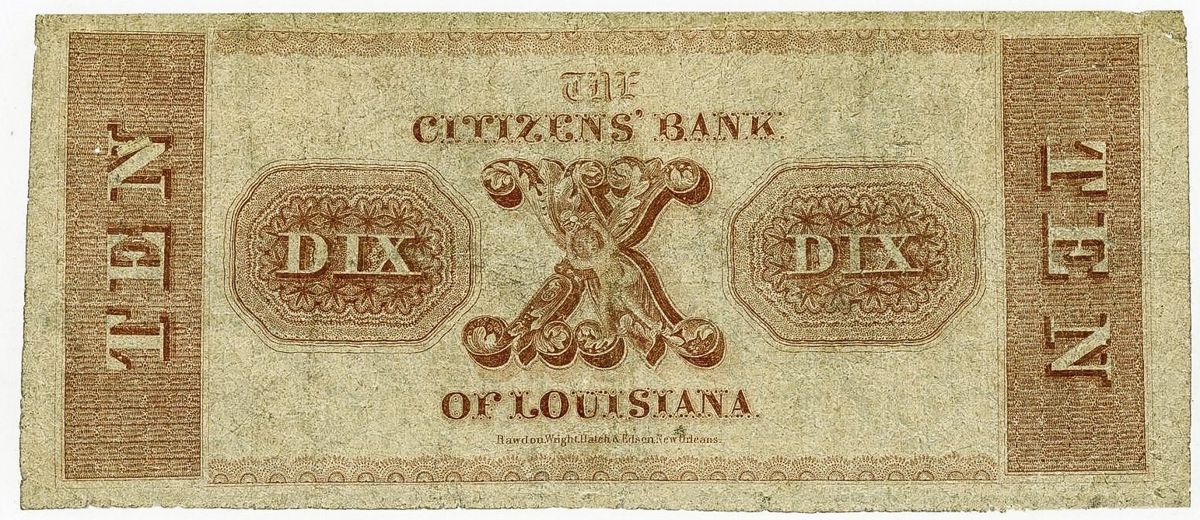
The first performance of Emmett’s new song occurred Monday, April 4, 1859 at Bryant’s stand, 472 Broadway. “Mr. Dan Emmett’s new Plantation Song and Dance DIXIE’s LAND” was an instant hit.5 So that’s the song. What about the name? The origin of Dixie is in dispute, but one leading notion involves the Mason-Dixon line—the demarcation of South from North (the Maryland/Pennsylvania line) by the surveyors Charles Mason and Jeremiah Dixon in the 1760s. (Roger Long debunks this, though, asking why the South wasn’t called “Masie.”) Another idea is that Dixie came from the French word for ten, dix as printed on popular New Orleans bank notes. “Traders came from afar to the land of dix-ies to get them,” Long writes.6 *For an idea of how Emmett meant his “walk around” to be performed on stage, you ought to stay up late one night and tune in if your TV station runs the old movie Dixie (1943), starring Bing Crosby as Dan Emmett. The sight of the minstrel troupe’s performance, and the whole theater standing and whooping it up with “Dixie” is corny, but thrilling. So “Dixie” isn’t much played today, just as Ole Miss cheerleaders won’t march beneath the Confederate battle flag. But as a testament to the South’s war spirit in the’60s, the song has no equal. Notes Richard B. Harwell, ed., The Confederate Reader (New York: David McKay Company, 1976 [1957]), 27. E. Lawrence Abel, Confederate Sheet Music (Jefferson NC: McFarland, 2004), 236. “’Uncle Dan’ Emmett—’Dixie’s Land,’” Confederate Veteran, vol. 3, no. 9 (September 1895), 266-69. E. Lawrence Abel, Singing the New Nation: How Music Shaped the Confederacy, 1861-1865 (Mechanicsburg PA: Stackpole Books, 2000), 30. George Bird Evans, “Original Copy of Dixie Identified,” Civil War Times, vol. 3, no. 7 (November 1961), 14; Philip Graham, “A Song Was Born: The South’s Dixie,’” Texas Quarterly, vol. 1, no. 2 (Spring 1958), 51-54. Roger Long, “Uncle Dan and ‘Dixie’: Music That Moved the South,” Civil War Times Illustrated, vol. 20, no. 1 (April 1981), 15. Steve Davis grew up in Atlanta, and as a kid attended Margaret Mitchell Elementary School. In music class, when Miss Kilpatrick led them in singing “Dixie,” his classmates would pause in the refrain to hear him roar about libbin’ and dyin’ in Dixie.