
Deo Vindice
Originally published September 2022 · pp. 22–23
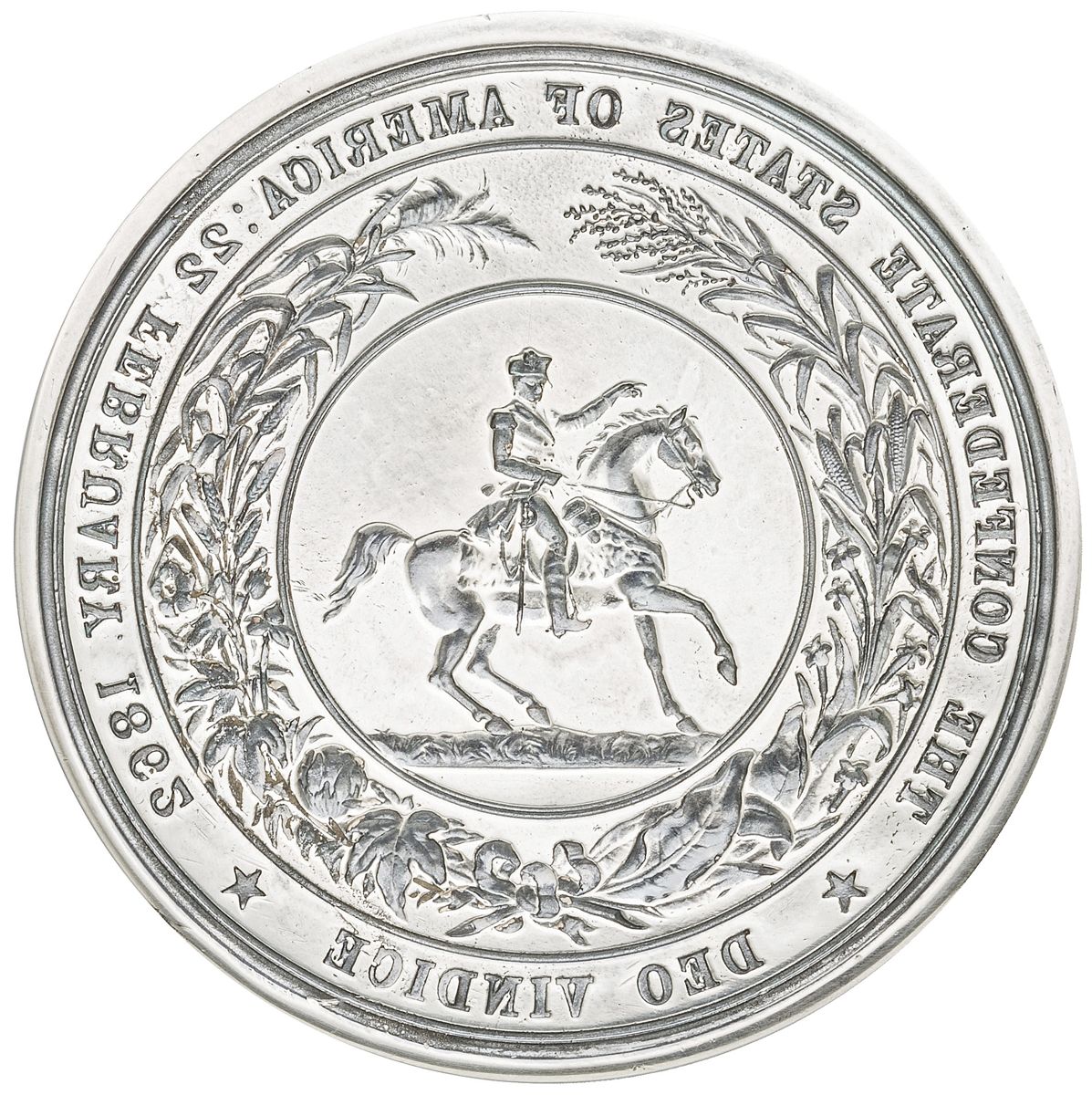
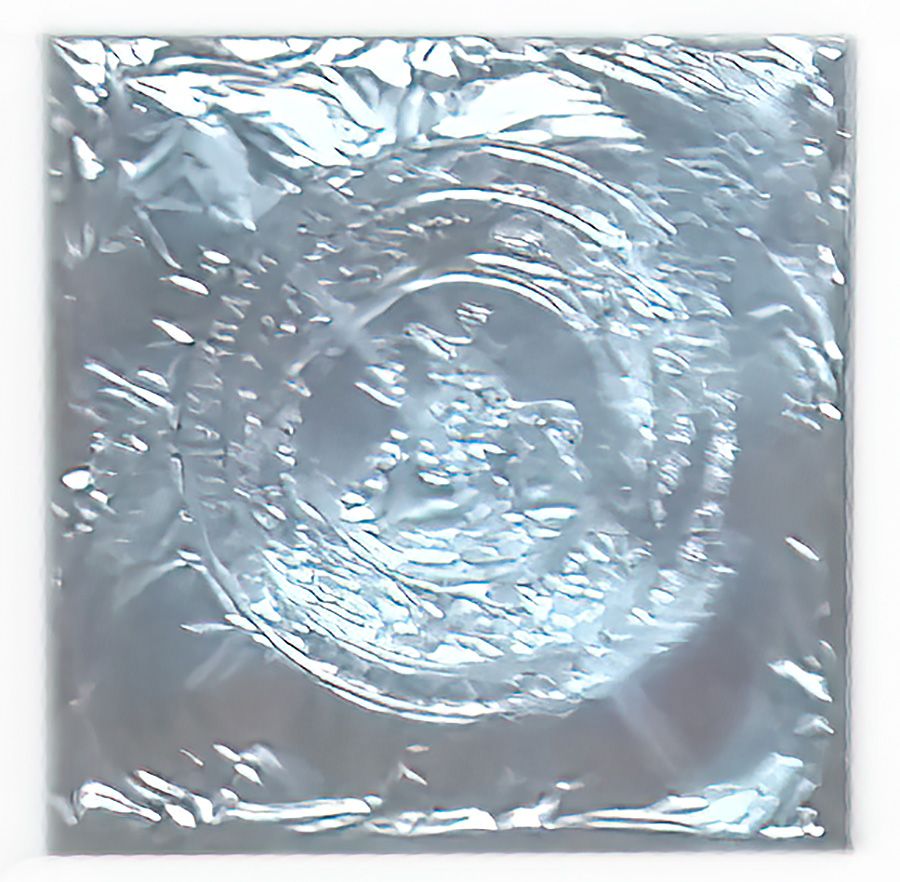
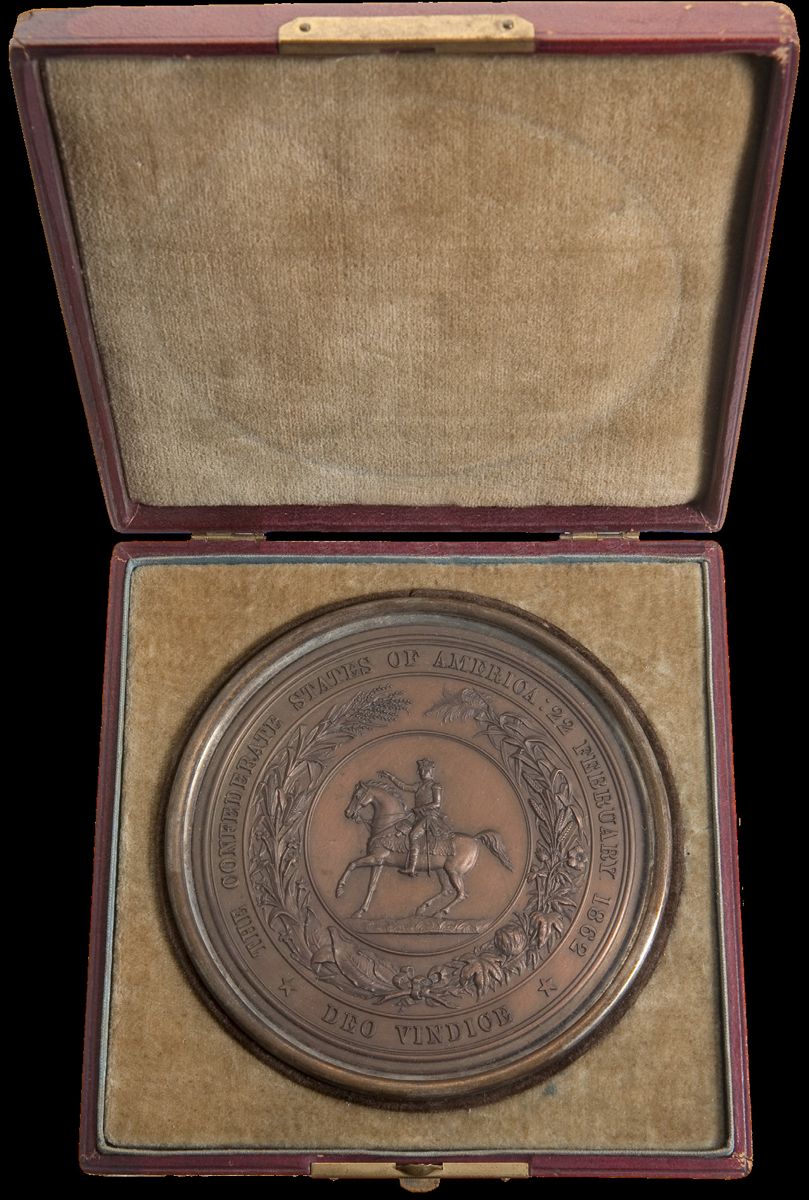
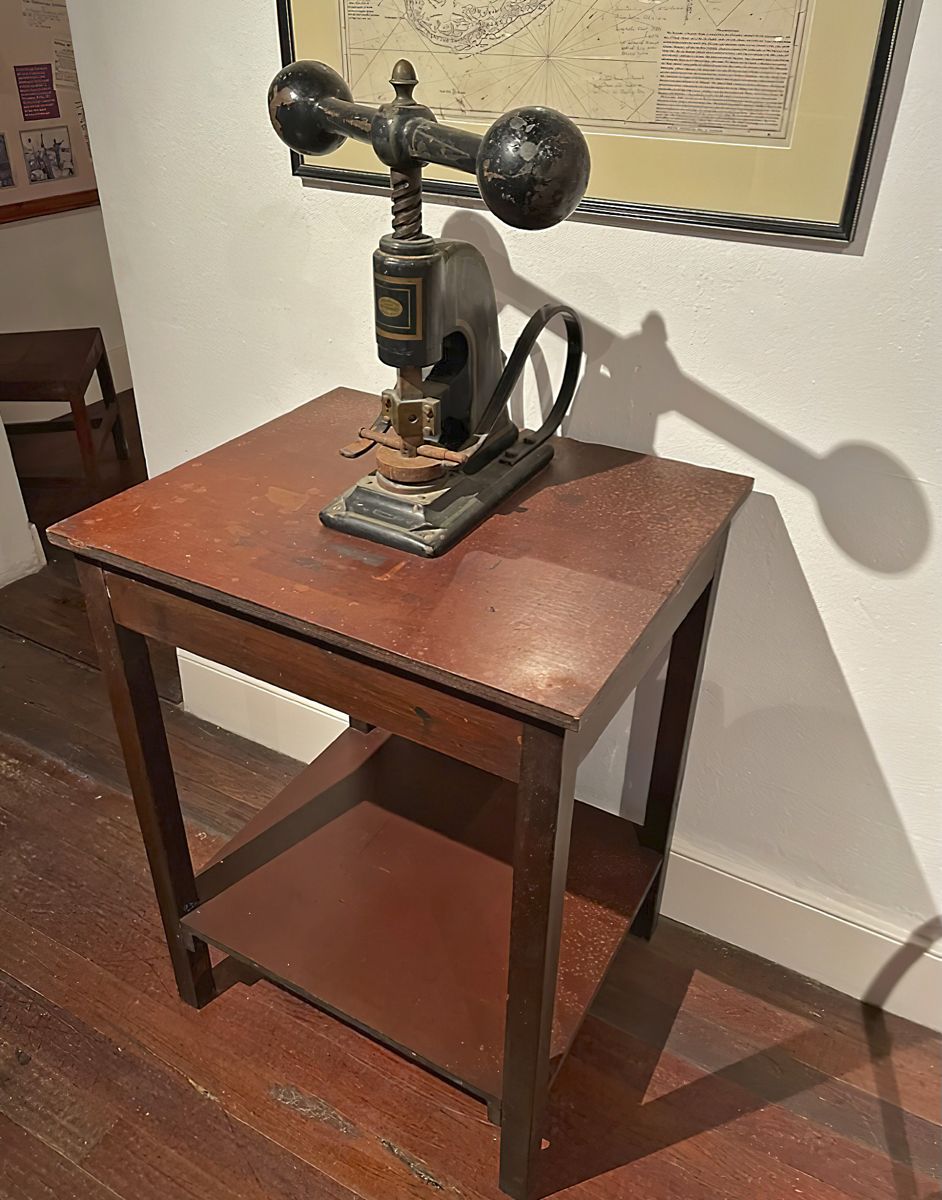
Deo Vindice When I interviewed Scott Thompson for last month’s column, I saw, among the numerous items decorating his office walls, an image of the Great Seal of the Confederate States. The image was impressed on a square of aluminum foil. Its color and sparkle made the piece stand out in a space crowded with frames encasing various documents. Since this aluminumfoil seal didn’t fit in with the main theme of Scott’s collection (Civil War items related to insurance) I didn’t mention it in August and decided that this piece is worthy of its own column. The term “seal” refers both to the hardware that makes the image and to the image itself. I will first discuss the image, then address the story of the welltravelled hardware. The design of the seal was established by a joint resolution of the Confederate Congress adopted on April 30, 1863. The most prominent feature of the Great Seal is the image of George Washington, based on Thomas Crawford’s equestrian statue of the first president. This monument, in Richmond’s Capitol Square, was the location of Jefferson Davis’s inauguration as president of the Confederate States on the 130th anniversary of Washington’s birth, Feb. 22, 1862. That date is inscribed on the seal, along with the nation’s motto, Deo Vindice. The Latin motto is best translated as “With God as our Protector.” Surrounding Washington is a wreath depicting the South’s principal agricultural products. The presence of Washington makes a statement about the Confederate States’ view of their cause and their rights as sovereign entities. They did not consider themselves to be in rebellion against the federal polity that George Washington and other Founding Fathers established; rather, they were asserting the independence they had won severally under Washington’s leadership and which they had never relinquished. What’s missing from the image is also interesting. The absence of any symbols of industrial might reminds us of the Confederacy’s main weaknesses, a weakness that contributed to their failure in asserting their independence. That’s the image. Now to the hardware, outsourced to England. A Confederate diplomat in London, James M. Mason, contracted with the sculptor John Henry Foley and the engraver Joseph Shepherd Wyon to design and produce the die, based on a photograph of the statue and a written description of the seal’s other elements. Mason was one of the figures in the 1861 “Trent Affair,” when he and John Slidell were taken from the RMS Trent by a Union ship and later released at the insistence of the British. Foley, a native of Ireland, was a prominent artist in London. Foley also sculpted a statue of Stonewall Jackson in 1875, the famous work which in 2021 was moved from the Virginia Military Institute to the Virginia Museum of the Civil War. Wyon was a member of a distinguished family of engravers engaged in that business from the middle of the 18th century to the early 20th. From 1858 until his death in 1873 Wyon was the Chief Engraver of Her Majesty’s Seals, a prestigious position also held by his grandfather, father, and brother. The solid silver circular die weighs in at three troy pounds. It measures three and fiveeighths inches in diameter and is three-quarters of an inch thick. The recessed image on the die, pressed against a cake of wax, would create a raised image on the government document. The large screw press that went with the seal was also made in London. Lieutenant Robert T. Chapman, CSN, was in charge of transporting the seal and its accoutrements across the Atlantic. Chapman had been Raphael Semmes’s second lieutenant on the Confederate raider CSS Sumter and was later first lieutenant on the CSS Georgia. Chapman and other naval officers escorted the seal, press, and related materials to Halifax on a British ship. From there, on another British steamer, the officers and their cargo sailed to Bermuda. Bermuda, of course, was the most important jumpingoff point for blockade runners. On the fourth attempt, in August 1864, the ship carrying the die ran past the Federal blockaders into Wilmington.
The press and some other materials were left in Bermuda. More on the press below. The seal was delivered to Confederate Secretary of State Judah P. Benjamin in September 1864. As the press was left behind in Bermuda, the seal could not be used as designed. However, with the help of a jury-rigged contraption, the seal was used at least twice. For the most part the Confederacy continued to use a seal of an older design, the seal of the Provisional Government. The postwar saga of the seal is filled with mystery and some chicanery. The first character to appear in this part of the story is William J. Bromwell, a clerk in the Confederate State Department. Bromwell took ten cartons containing department papers to Charlotte, and stored them in the courthouse on April 1, 1865, just one day before the evacuation of Richmond. The seal had been placed in one of those cartons. The government was dissolving. There was no one to give Bromwell any instruction about the material he was holding. He stored them in his own name and took them to Washington, D.C., the following year. There Bromwell was employed by the next character to step on the stage, John T. Pickett. At some point Bromwell told Pickett about the boxes and their contents.
Negative die of the Great Seal to produce raised image in wax. (Heritage Auctions)
With Pickett as the go-between, Bromwell sold all the papers to the United States government in 1872 for $75,000. The documents had been inspected and certified as authentic by Thomas O. Selfridge, USN. Selfridge has a notable backstory, one that involves four lost warships. He was on the USS Cumberland when it was sunk by the CSS Virginia sunk in a collision with another Federal ship. The seal was not part of the deal reached between Bromwell and the U.S. Government. For some unknown reason Bromwell gave the seal to Selfridge while the sale was being finalized. Selfridge loaned the artifact to Pickett, who had 1,000 electroplate copies made. Proceeds from the sale of the replicas were to be used for the benefit of Confederate widows and orphans. Whether any widows and orphans received any aid is questionable. After Pickett died in 1884 the only two people aware of the seal were Selfridge and the man who made the electroplate replicas. Bromwell had died in 1873; the electroplater was sworn, by Masonic oath, to secrecy. Around the turn of the century some people got curious about the seal. A North Carolina judge, Walter Montgomery, researched documents in the Library of Congress and came to believe that Selfridge, by that time a retired admiral, was in possession of the goods. In 1911 Montgomery reported on his findings in the Richmond Times-Dispatch. A long article in the Oct. 15, 1911, edition presents the details of Take a piece of aluminum foil to Bermuda and make Montgomery’s findings and casts Bromwell, Pickett, and Selfridge your own Great Seal of the Confederacy. in a very unflattering light. The following year Gaillard Hunt, chief of the Manuscripts Division of the Library of Congress, conducted his own research and reached the same conclusion as Montgomery. Hunt pressured Selfridge by threatening to publish. Selfridge conceded, but demanded payment of $3,000. I found no explanation why Selfridge yielded to Hunt’s pressure in 1912 after ignoring the negative publicity the previous year. Perhaps Hunt knew more of Selfridge’s dealings than what was reported in the TimesDispatch. Perhaps pressure from other sources was brought to bear. Gaillard Hunt convinced three prominent Richmond men to chip in $1,000 each to meet Selfridge’s price. The buyers wanted to make sure the seal was genuine, of course, but who could verify the seal’s authenticity? Why Allan G. Wyon of course, the nephew of Joseph Wyon, who was continuing the family business in London. Three decades earlier, at John Pickett’s request, the firm had declared that Pickett’s electroplate replicas “could not have been produced except from the original seal.” In 1912 Allan Wyon said the silver seal being sold by Selfridge was the genuine Great Seal of the Confederacy in brass. Inscription: * article. The Richmond buyers acquired THE CONFEDERATE STATES OF AMERICA: 22 FEBRUARY the seal to preserve it for the public. * DEO VINDICE. (Library of Congress)
in the Battle of Hampton Roads. He briefly commanded the USS Monitor after that ship’s captain was injured. Transferred to the Mississippi Squadron, Selfridge was captain of the USS Cairo when that gunboat went down in the Yazoo River in December 1862, the same month the Monitor was lost off Cape Hatteras. In 1864 Selfridge commanded the USS Conestoga when it was
Hunt arranged for the seal to be transferred to the Confederate Memorial Literary Society. The organization operated the facility that was later named the Museum of the Confederacy and is now known as the American Civil War Museum. The Great Seal of the Confederacy has resided in this museum since 1912. What happened to the screw press that was left in Bermuda back in 1864? That story can be told briefly. A Confederate commercial agent, John Bourne, held onto the press until he died two years after the war. It was then sold at auction. Its whereabouts for the next 20 years are unknown. In 1888 a Bermudan named John S. Darrell bought it “as a piece of junk.” Once cleaned up, the “piece of junk” proved to be in good condition. Darrell had a replica of the Great Seal cast in brass. According to the Bermuda National Trust, the brass seal was made by the original engravers in London. So, for the fourth time in this story the Wyon firm entered the picture. Darrell’s descendants, the Cox family of Hamilton, Bermuda, have the replica seal and the authentic press in their private collection. The Globe Hotel Museum in St. George’s, which is operated by the Bermuda National Trust, has working copies of the seal and the screw press on display. As Scott Thompson told me, “If you ever go there you can take a piece of aluminum foil and press it and make your own Great Seal of the Confederacy.”
Sources: I consulted several online sources to piece this story together. The most detailed and reliable source is a 1987 article written by Guy R. Swanson in the Summer Edition of the Museum of the Confederacy Journal (online reprint by the Confederate Historical Society of Belgium). Swanson had earlier been the museum’s Curator of Manuscripts and Archives. The Bermuda National Trust provided much information, including a photo of the screw press. The Oct. 15, 1911, edition of the Richmond Times-Dispatch devoted a full page to detail the research conducted by Walter Montgomery. An even more detailed article, appearing on May 19, 1912, recounted the entire story including information on Hunt’s role and the sale to the three Richmonders, which by that date had been completed, subject only to verification by the Wyon firm.
Gould Hagler is a retired lobbyist living in Dunwoody, Ga. He is a past president of the Atlanta Civil War Round Table and the author of Georgia’s Confederate Monuments: In Honor of a Fallen Nation, published by Mercer University Press in 2014. Hagler speaks frequently on this topic and others related to different aspects of the Civil War and has been a regular contributor to CWN since 2016. His email is [email protected].
Replica of press on display at Globe Hotel Museum (Bermuda National Trust Collection)