
Champagne Dreams John Hunt Morgan’s 1863 Raid – Part II
Originally published September 2022 · pp. 20–21
Champagne Dreams John Hunt Morgan’s 1863 Raid – Part II “A street fight is one of the most desperate modes of warfare known to a soldier. The advantage is strongly against the storming party.” Lt. Kelion Franklin Peddicord, 2nd Ky. Cavalry On July 2, 1863, C.S. Gen. John Hunt Morgan launched his “Ohio and Indiana Raid” by crossing the rain swollen Cumberland River into Kentucky. On July 4, Morgan had to find an alternate Green River crossing after losing experienced officers against a much smaller force during the Battle of Tebb’s Bend, Ky. Kentucky newspapers assisted the raiders creating “scare and clamor,” by exaggerating the size of Morgan’s force and speculating on where he would attack next. U.S. Gen. Ambrose Burnside, Dept. Of Ohio, sent a message to U.S. Col. Charles Hanson, 20th Ky., stationed at Lebanon, Ky., “to select some defensible position and hold out if attacked until re-enforcements came, and not to let the enemy take me.” Hanson had about 380 men; Morgan’s 2,400 men were less than eight miles distant. Morgan’s dilemma was that he needed the Federal supplies in Lebanon but wanted to minimalize casualties. Union colonel Hanson was the brother of Confederate General Roger Hanson, who had not only aided the Morgan’s Raiders, but had been killed in battle. Furthermore, the Federal force included former friends and family of Morgan’s men. On July 5, 1863, the Battle
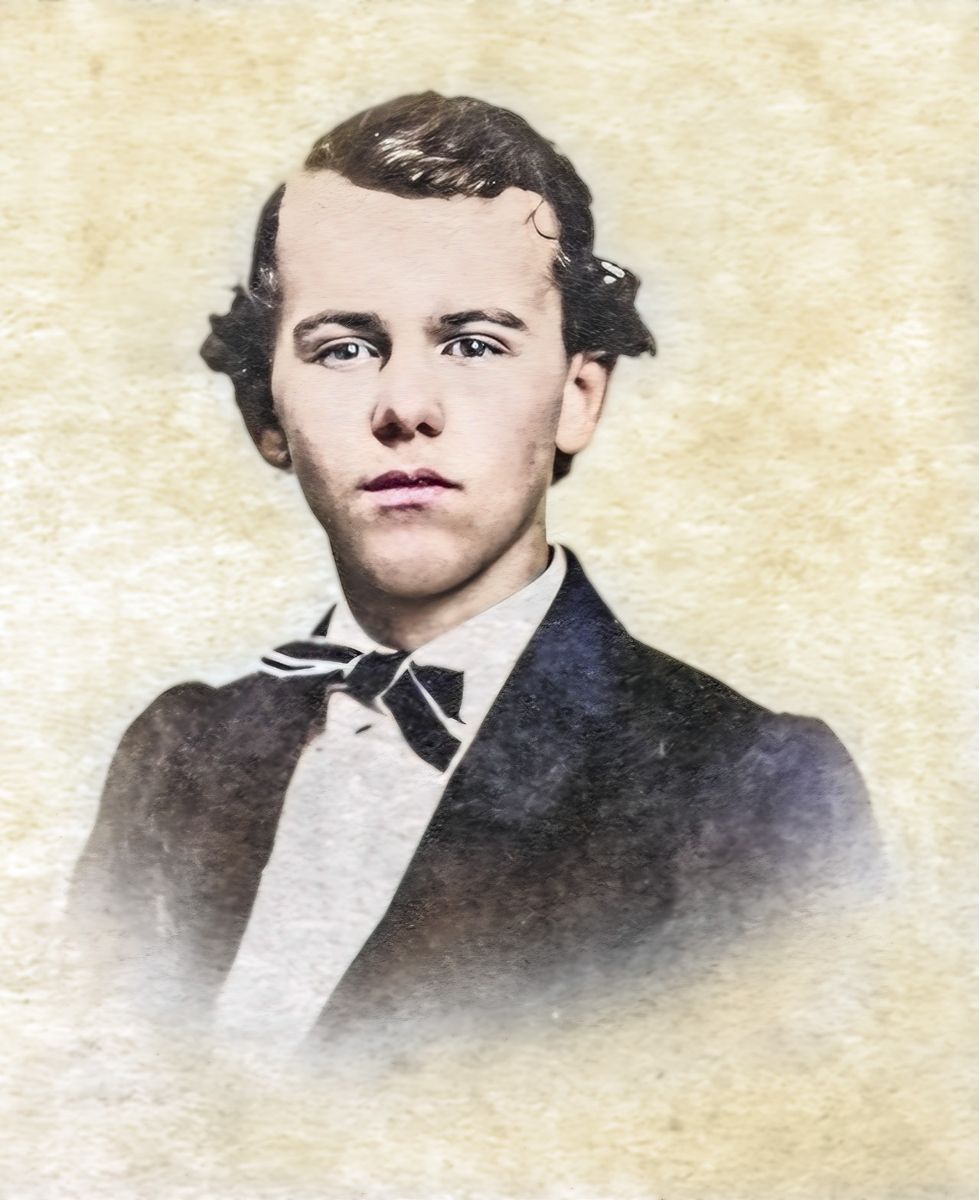
Col. Charles Hanson, 20th Ky. Colorization © 2022 civilwarincolor.com, courtesy civilwarincolor.com/cwn. (Public Domain)
of Lebanon, Ky., began at 6:30 a.m. with skirmishing. Hanson had built a barricade of wagons across the road and positioned 330 skirmishers who he planned to have fall back through town to the brick railroad depot that had been prepared for defense. Morgan’s men formed a two rank front, stretching two miles across open fields. At 7:00 a.m., C.S. artillery Capt. Edward Byrne fired his guns at the barricade. As the defenders retreated, Morgan sent Col. Robert Alston under the flag of truce to demand a surrender. Hanson declined. “Then notify the women and children to leave immediately,” Alston replied, “The town will be shelled.”
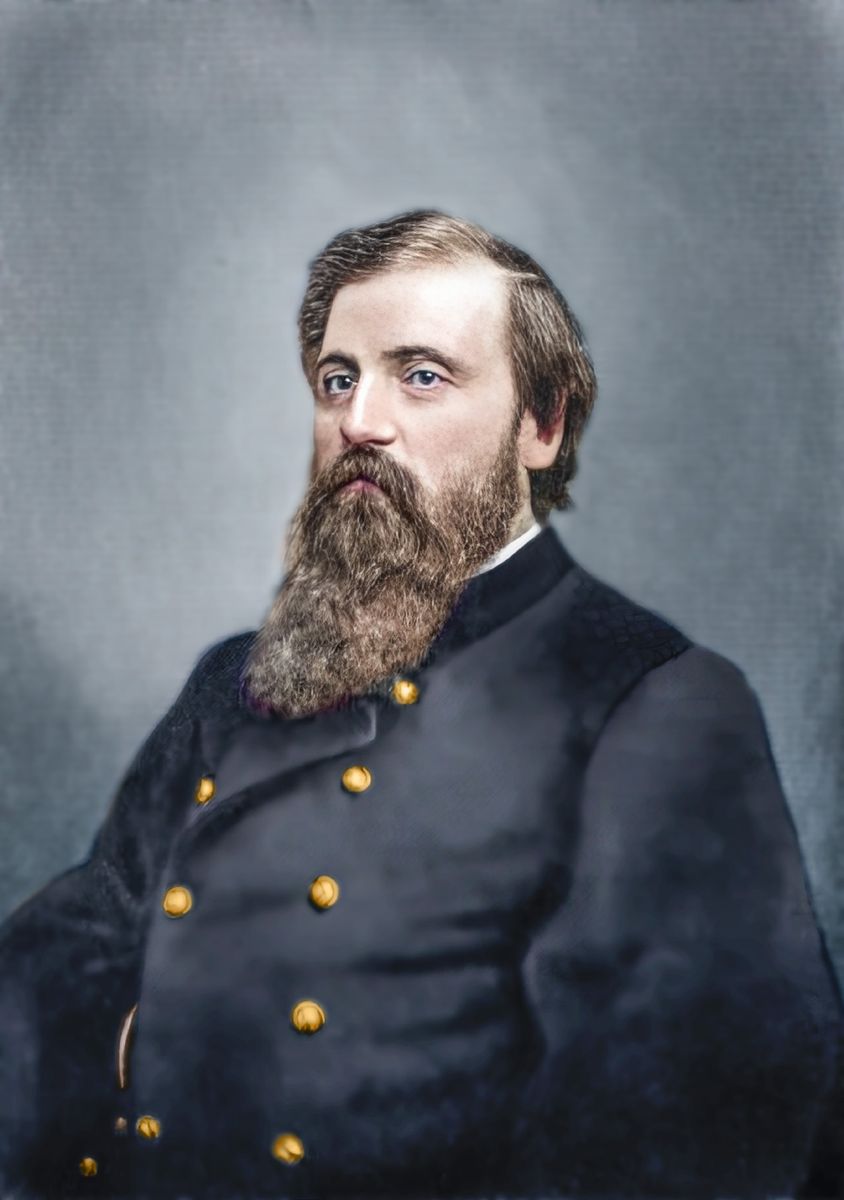
C.S. Lt. Thomas Hunt Morgan, 2nd Ky. Cavalry. Colorization © 2022 civilwarincolor.com, courtesy civilwarincolor.com/cwn. (University of Kentucky Libraries Special Collections and Research Center)
C.S. Lt. Kelion Franklin Peddicord, 2nd Ky. Cavalry. Colorization © 2022 civilwarincolor.com, courtesy civilwarincolor.com/cwn. (Public Domain)
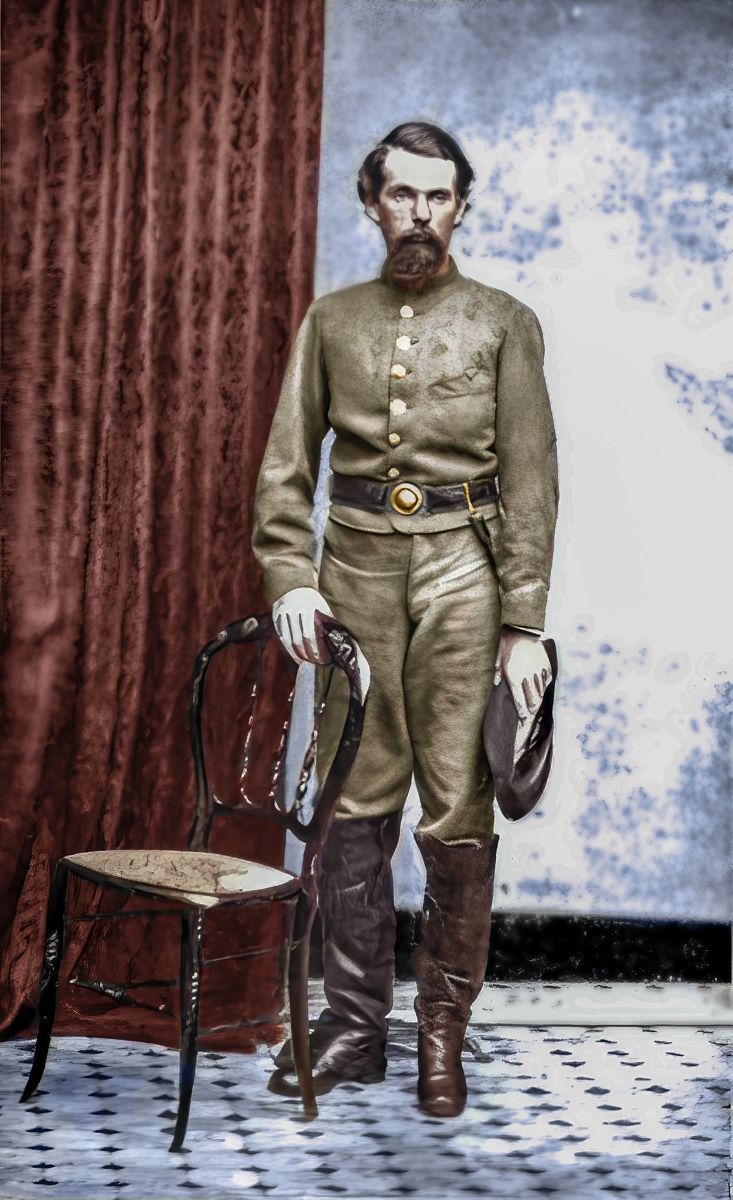
Before the townspeople could be evacuated, Byrne opened fire; two guns aimed at the railroad depot and two into the streets. The temperature was in the nineties. The Federals’ Enfield and Springfield rifles kept the Confederates at least 1,000 yards away from the depot. C.S. Col. Roy Cluke, 8th Ky., was pinned down in the weeds. Byrne’s guns were ineffective striking the depot’s first floor sheltering the Federals but did set the roof on fire in two places. Col. Basil Duke realized that what was needed was a regiment experienced in street fighting. Duke sent in Maj. Thomas Webber, 2nd Kentucky. Lt. Kelion Peddicord was part of the first mounted charge. The men came within 75 yards of the railroad depot before dismounting, “under the most deadly fire that we ever saw. The artillery took position on our right, opening on the depot in dead earnest. At every report the boys would cheer, the building tumbling at every discharge.” About noon, Morgan’s attempt to send in a messenger bearing the white flag of truce failed as both sides would not stop firing. The cavalry rode up and down the streets. “Some of our troops would frequently run their guns and pistols through the windows and fire, while others would storm the doors and gain their entrance. … The whole town was quickly in a blaze and getting disagreeably hot.”
been transported from Kentucky to Indiana that night. The raiders were gleeful at arriving in a land untouched by the War. Some gave champagne parties supplied by the boats. Sgt. Henry Lane Stone wrote that “… We intend to live off the Yank hereafter and let the North feel like the South has felt of some of the horrors of war. … I just imagine now how the women will bug their eyes out at seeing a Rebel army.” Sources:
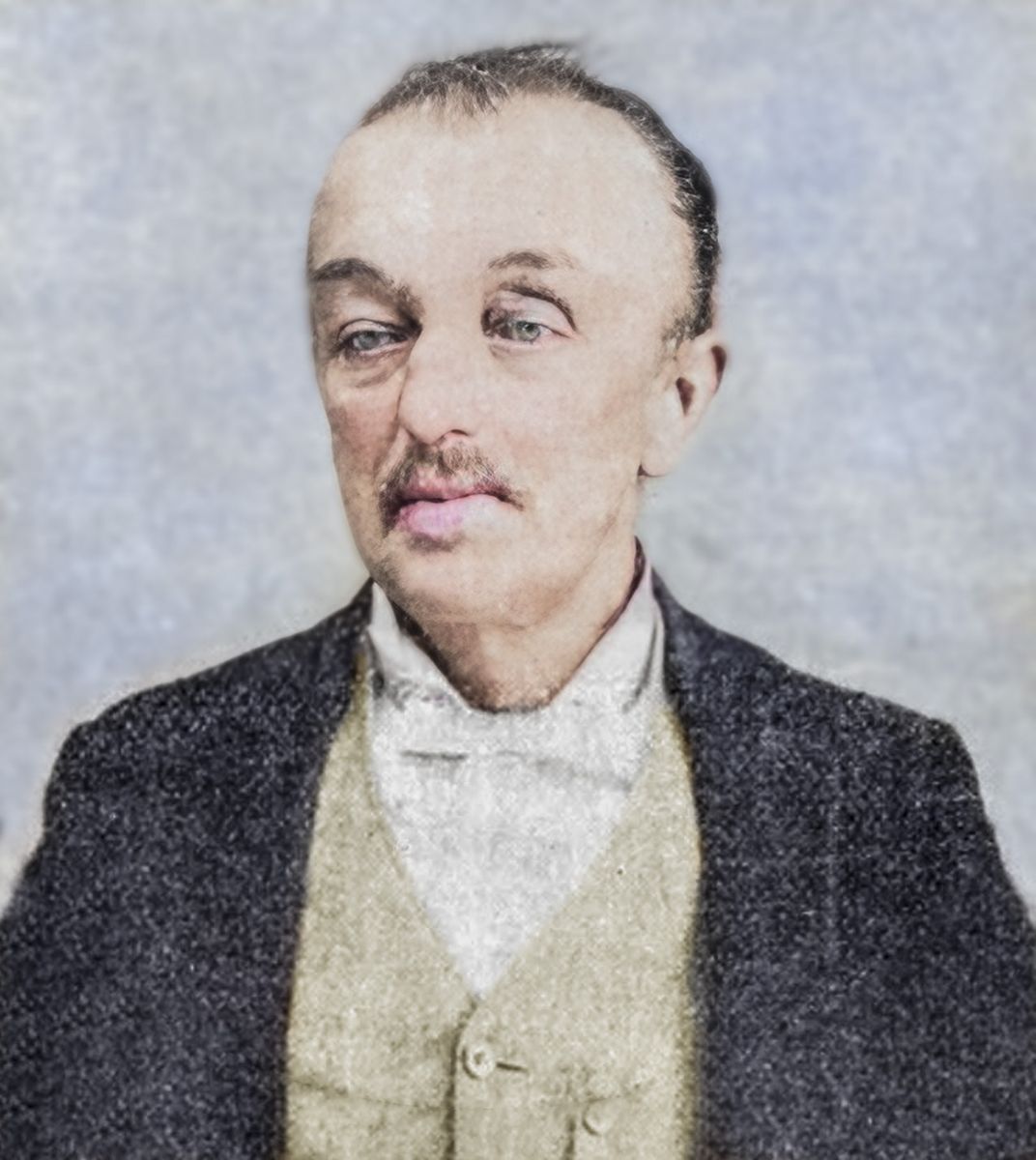
George A. “Lightening” Ellsworth. Colorization © 2022 civilwarincolor.com, courtesy civilwarincolor.com/cwn. (Public Domain) Running ahead of the first charge was Lt. Tom Morgan, the well liked 19-year-old brother of the general. He was shot in the chest in the first volley. “His brother Calvin caught him as he fell, and he died in Calvin’s arms; his only words were: ‘Brother Cally, they have killed me.’” Morgan ordered the buildings burned. About 1:20 p.m. Hanson “reluctantly surrendered.” C.S. Capt. Charlton Morgan had to be prevented from shooting surrendered U.S. captains McLeod and Parrish of the 20th Ky. The protesting Hanson was grabbed by his beard. The general vowed to shoot the man who harmed a prisoner. He turned to Hanson saying, “Charles, when you go home, if it is any source of gratification to you, tell Mother you killed brother Tom.” The news that long-awaited Federal reinforcements were approaching compelled the Rebels to quick march out of town “herding the prisoners before them.” A heavy rainstorm was the salvation of the dehydrated, badly treated men. The following day, Morgan paroled the prisoners. On July 6th, Morgan’s telegrapher, George “Lightening” Ellsworth, rode off with a detachment to the telegraph office at Bardstown Junction. Ellsworth had studied in Samuel Morse’s telegraph school and had the skill set to mimic another telegrapher’s cadence or “fist.” The Federals were sending messages conjecturing Morgan was heading towards Louisville, Ky., and Ellsworth, a pioneer in counterintelligence, confirmed the inaccurate intelligence. Instead, Morgan actually was headed to Brandenburg, Ky., to cross the Ohio River into Indiana. He tasked 10th Ky. Cavalry captains Sam Taylor, a nephew of former President Zachary Taylor, and Clay Merriwether to capture boats. When the packet steamer John B. McCombs arrived in Brandenburg as scheduled, 40 armed men leaped aboard from the wharf, surprising Captain Ballard, the crew, and 50 passengers. The men soon spotted a faster mailboat, the Alice Dean, which was not scheduled to stop. According to the Cincinnati Gazette, “the McCombs was headed out just in time to touch her bows, when the Rebels who were concealed on the McCombs, jumped on board the Dean and effected the capture of that boat also.” On July 8th, Morgan loaded his men and supplies on to the vessels. The morning fog lifted to reveal some Indiana Home Guards on the opposite riverbank with an old cannon on a farm wagon chassis. The defenders’ cannon whistled and their rifles blazed; Byrne’s Parrott rifles and howitzers responded. It took only one round for the Indianans to scatter. By midnight, the raiders were in Indiana. The Alice Dean was torched. Ballard’s friendship with Duke and his assurance that he would immediately travel to Louisville, spared his boat. The captain reported that by actual count 4,800 men, 5,000 horses, two 6-pounder cannon, and two 12-pounders had
★ Brown, Dee., The Bold Cavaliers: Open Road Media, 2012. ★ Mowery, David L., Morgan’s Great Raid: The Remarkable Expedition from Kentucky to Ohio: Arcadia Publishing, 2011. ★ Logan, India, W. P., Kelion Franklin Peddicord Of Quirk’s Scouts: Neale Publishing Company, 1908. ★ United States, War Department. The War of the Rebellion: A Compilation of the Official Records of the Union and Confederate Armies. Washington: 1894. Series 1: Volume 23, Serial 34, page 647–648.
Stephanie Hagiwara is the editor for Civil War in Color.com and Civil War in 3D.com. She also writes a weekly column for History in Full Color.com that covers stories of photographs of historical interest from the 1850’s to the present. Her articles can be found on Facebook, Tumblr and Pinterest.