Yale’s Confederates: A Biographical Dictionary
By Nathaniel Cheairs Hughes Jr
(June 2009 Civil War News)

Illustrated, 296 pages, 2008. University of Tennessee Press, 110 Conference Center, 600 Henley St., Knoxville, TN 37996-4108, $45 plus shipping.
Nathaniel Hughes’ new book, Yale’s Confederates: A Biographical Dictionary, has its origins in the author’s experiences in the early 1950s as a Yale undergraduate from the South. When Hughes first passed through Memorial Hall, he was surprised to see that Yale had memorialized in marble not only those alumni who had died to preserve the Union, but Confederates, too.
“Confederates — from Yale, in Connecticut?” Hughes asked himself, shaking his head. The question intrigued him then and some 50 years later it continued to intrigue him, to the point where, in Hughes’ words, he “determined to rescue a reduced regiment of Yale’s prodigal sons.”
This Yale alum is glad he did, because the result is a jewel within the genre of thumbnail biographies of Confederate figures exemplified by Bob Krick’s Lee’s Colonels and Bruce Allardice’s Confederate Colonels.
Hughes’ book profiles more than 500 men who attended college, medical or law school at Yale and served the Confederacy in some capacity. By background, these men were a diverse lot. To be sure, some of them were scions of the Southern plantation aristocracy — men like Thomas and John Devereux of North Carolina, who together owned more than 1,500 slaves.
Others, however, came from more modest backgrounds. For example, Judah Benjamin, who held several posts in Jefferson Davis’ cabinet, came from an impecunious Jewish family that struggled to pay his tuition at Yale.
A significant minority of Yale’s Confederates actually grew up in the North. In most cases, these men had moved south after leaving New Haven and had taken Southern wives and put down roots in the Southland.
An example is Samuel Andrew Durand, a native of Connecticut and a descendant of one of the founders of Yale in 1701. Like many Northern college graduates of his day, Durand took a teaching job in the South after college. He wed a Southern bride and settled permanently in Atlanta. During the war, Durand’s firm manufactured canvas goods for the Confederate army.
The law was the most common prewar occupation for Yale’s Confederates, though a good many were also doctors, farmers, merchants, teachers and ministers. The war ruined many of them, either physically or financially, causing Hughes to remark about the “ghastly price” that Yale’s Confederates paid for their Southern pride.
Most of Yale’s Confederates were soldiers during the war, but more than a few were state or Confederate legislators or Richmond bureaucrats. Twelve were general officers, including Lt. Gen. Richard Taylor, the highest-ranking Confederate officer not to have been educated at West Point.
Scores of others were field or company grade officers, some of whom — like Colonels Francis Bartow and Charles Fisher of Bull Run fame — were killed in action leading heroic charges. But most of the Yale men who wore the gray soldiered in obscurity, some as mere privates.
The one characteristic shared by the overwhelmingly majority of the Yale men who fought for the Confederacy, however, was their steadfastness to the cause. Only a couple deserted during the entire war.
If the Confederate war effort was, as it was often said, a “rich man’s war and a poor man’s fight,” the war record of Yale’s Confederates belies it. Take, for instance, James Metcalfe Gillespie, an 1850 graduate of Yale and Natchez cotton planter who owned 269 slaves in 1860.
According to Gillespie’s class secretary, Gillespie “kept aloof from secession.” Nonetheless he did not let his politics stand in the way of duty, and in April 1861 he enlisted as a private in a Mississippi infantry regiment. Gillespie was taken prisoner during the last week of the war in Virginia and was not released until late June 1865.
Like Gillespie, the brothers Lemuel and William Connor were Natchez cotton nabobs who owned over 250 slaves in 1860. Both brothers graduated from Yale in 1845 and, together with at least 16 other Yale men, enlisted early in the war in the Adams Troop of the Jeff Davis Legion Cavalry.
William rose to the rank of major in the regiment and was killed leading a counterattack at Gettysburg. Lemuel survived the war but was soon bankrupt.
Yale’s Confederates: A Biographical Dictionary reflects the depth of research and the craftsmanship that readers of Hughes’ many Civil War books have come to expect from him. Hughes spent many hours in the stacks at libraries in New Haven and elsewhere gathering and culling biographical data, and it shows.
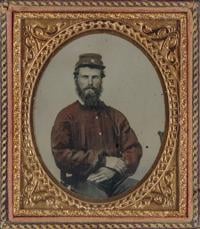
Hughes’ writing is crisp and clear. The inclusion of photos of more than 40 of his subjects enlivens his narrative. Physically, the book is oversized and printed in double columns, although the text is double-spaced and easy on the eyes.
Hughes chose to dispense with both footnotes and a bibliography, but many of the individual profiles conclude with citations to source materials for readers who want to delve deeper into the life of a particular Confederate. An index would have been a nice addition, and better editing would have purged some of the many typos and minor factual inconsistencies from the book.
Readers of this newspaper who enjoy pithy biographical sketches of Civil War figures will especially appreciate Yale’s Confederates: A Biographical Dictionary, even if they went to college elsewhere. This old Eli recommends it enthusiastically.
Reviewer:
C. Michael Harrington
C. Michael Harrington is a member of the Houston Civil War Round Table and Civil War Aficionados. He has written several articles on South Carolina Confederates. A practicing lawyer, he has degrees in economics from Yale and Cambridge and a law degree from Harvard.
|