Civil War News
For People With An Active Interest in the Civil War Today

Home / Calendar / News Stories / News Archive / Preservation Columns / Book Reviews /
Living History
/ News Briefs / Subscriptions / Testimonials / Artillery Safety Rules
Photo Galleries / Feedback / Links


Report From Richmond

By Cindy MacLeod


February/March 2007

Visitors' questions and research of scholars have shaped the interpretation of the National Park Service (NPS) sites since its founding in 1916. Many park films, exhibits and front-line park interpretive rangers have an honored tradition of engaging audiences with dramatic true stories layered into description of the park's physical attributes or historic events.

That tradition's goal is to ensure that the American people who own these places value them and understand their meaning and importance to the nation. The specifics of the interpretive delivery methods should be informed by careful research, evaluation and appropriate technology. Richmond National Battlefield Park is working to find the best ways to connect with people; as we make those connections, we meet another goal of finding partners to preserve additional battlefield land.

The demographics of our country's population show that we are varied in experience and education. At our best, NPS interpretive services reach people other than the self-selected visitors, provide some instant satisfaction, provoke deep thought and are unimpeachably accurate factually.

The challenge for interpretation is great at a park like Richmond NBP where some visitors prefer to refer to the War of Northern Aggression over the more widely used Civil War. Current differences over what to call the military conflict in Iraq echo that debate.

Other 21st-century events, e.g. the re-examination of Gerald Ford's leadership in crisis, can be compared with Civil War time leaders' actions with healthy discussion sometimes devolving into partisan disagreement.

How to convey passion and objectivity toward what was a divisive subject then and what remains for some a source of controversy takes skill. How to invite in successfully those who previously had not found the story relevant takes effort.

How to bring the Civil War significance alive for visitors walking the meadows, forests and modern streets demands innovation.

I was fortunate in 1990 to come to Richmond as superintendent at a time ripe for infusion of energy and funds at the park. The park had begun in the 1940s in the tradition of private sector tours tracing troop movements; the tours were led by military historians for veterans and their descendants.

Once that generation passed, the emphasis was on episodic living history programs and presentation of the life of the Civil War soldier, a more generic than specific activity in the 1960s and 70s. Visitation ebbed and few additional acres were preserved.

The past dozen years have seen a broadening and centering of interpretation as well a near tripling in acres owned by the National Park Service at Richmond. The park interpretive stories now include a range of civilian, political, industrial, social and military themes and a variety of media for interpretation and civic engagement.

In 2006 we initiated our use of podcast technology in an effort to expand our effectiveness. Half-hour-long podcast programs for Gaines' Mill and Malvern Hill battlefields can be downloaded free to any MP3 player from the www.civilwartraveler.com Web site, which has a link from our park Web site at www.nps.gov/rich.

We are currently developing a podcast interpretation of the Cold Harbor battlefield as well as one of Lincoln's walk through Richmond April 4, 1865, complementing our commitment to acknowledge the U.S. President's historic wartime visit to the Confederate capital city.

When we first ventured into this project, few of us understood what podcasting was. Thank goodness for partners and thank goodness for open-minded staff led by Assistant Superintendent David Ruth. One of the park's wonderful allies is CivilWarTraveler.com operated by Don Pierce and his staff of one who provided technical support and encouragement. Together we produced the Malvern Hill battlefield podcast for the first tour of its kind at the park.

Malvern Hill was the last engagement of the 1862 Seven Days Campaign and today is the largest and best preserved battlefield at Richmond with nearly 1,000 protected acres.

Ranger/historian Mike Andrus developed a 10-stop narrative for a 1.5-mile trail across the battlefield's gently sloping open fields. A high-resolution battlefield map, created by the park's resource management division, identifies the 10 stops along with key troop positions. The map is essential for the podcast tour, and it helps those who choose to experience the tour at home.

Over the years Mike has conducted intensive research on this battle and helped to coordinate the recent landscape rehabilitation work that resulted in the removal of many acres of non-historic trees. His presentation underscores the importance of understanding terrain in the outcome of the battle.

At each stop the listener stands at the center of the action being described. Along the way visitors experience the Union and Confederate perspective as they traverse the hallowed ground. The listener also hears about the civilian residents whose lives were dramatically changed on that hot July afternoon in 1862. What makes Mike's tour special is that it was unscripted and recorded in real time on the battlefield trail.

Public response exceeded expectations. Since its debut in March, the podcast site has received more than 350 visitors a week, remained in the top 20 of history-related podcasts, and feedback has been, without exception, extremely positive.

Public response is important for us. At our main visitor center at the Tredegar Iron Works we invite visitors to scribe their thoughts. We are seeking evidence of our theory stated in the 1995 General Management plan that "... RNBP can become a moving and eloquent place where visitors can examine for themselves the meaning of the American Civil War and its relevance in the modern world."

Here are only a few excerpts from the individual notecards written by visitors reflecting a wide and diverse participation:

Very interesting, detailing a lot of items history books did not teach us. I am very impressed and at age 78 wish I had knowledge of all this at age 20.

I have mixed feelings. Two of my ancestors fought with the Union and one with the Confederacy. I tend to agree with the idea that states should have more power and the Federal Government less. If only the South had defended other rights than the right to own slaves.

If you want democracy, you have to accept the reality that sometimes the majority will make the wrong choice. The founding fathers who opposed slavery didn't have the political power to abolish it in the constitution, so they deferred the issue until later ’Äî but later eventually arrived. The Civil War is part of the price of democracy. Sometimes the majority wins at the ballot box ’Äî but sometimes the only victory possible is in the battlefield.

I'm glad the Lincoln statue is here. To continue to support the Confederacy is unpatriotic.

My ancestors fought for the South during the war. We do not want that nasty Lincoln statue in the South. He was evil. Let's keep Richmond Confederate. I am from North Carolina.

The Civil War to me means the privilege of being here. Born in Mexico, raised in Chicago, worked in Paris and now learning my country's history.

We were born and raised in North Dakota. I know this area and the story of the Civil War only from books ’Äî to be here is a desire of many years. We consider the Civil War as a turning point for our nation and its people. Your center is critical for the youth of today to help them learn the story of Independence and then the story of the Civil War ’Äî two powerful stories. We appreciate your maintaining this center.

What a beautifully crafted building that incorporated old world design (Iron Works) and new contemporary. I was so impressed. Additionally, you put a face to Civil War southerners that was originally the "evil monsters"to this northerner.

The Civil War was fought over me, an African-American woman. More blood was shed over the lives of Black Americans than in any other war. I am a proud American. I pray that our wounds will FINALLY heal.

I have been studying Civil War sites from the saddle of my bicycle, across 100s of miles, for about 10 years. My fascination with it eludes me - I am simply drawn into it.

What a waste of life, land, and love.

As a soldier and an instructor of Civil War History, the fact that I must continue to remind students of is simple: The Civil War Was About Slavery!

Long live the South. The wrong side won!

It means a lot to me because I would not be me or free.

We think A. Lincoln was a "great gentleman."War is ugly. Yesterday, today and tomorrow. Life is too short, enjoy every minute of it.

The Civil War provides us evidence that war solves nothing. It may stop the progress of evil but it is not a solution to evil. We are still fighting this war over states rights and race. We should fully understand when other peoples hold onto their hate and anger for centuries.

I cannot discount the amazing advances in medicine and engineering that improve our lives forever.

It is with deep sorrow that I view these scenes about the Civil War/War Between the States - a period of great tragedy, massive loss of life, cruelty of all sorts. I do so wish we could all feel some degree of peace at last. We have so much in the present day to solve.

The most recent addition in 2003 to our exhibits at Tredegar is the statue of President Lincoln and his son who visited Richmond in April 1865. That visit was described by a prominent modern historian as producing "the most unforgettable scenes of this unforgettable war."

But indeed, that landmark visit had been forgotten over time, neglected by the NPS in Virginia, although the NPS celebrated President Lincoln in Washington, D.C., Illinois and Kentucky. Pulling that event from history's dustbin evoked strong opinion, as you can see from the above, which I consider positive.

I am impressed when I read these notes. People want to communicate how they've processed their experience of visiting Richmond National Battlefield Park and how they relate it to their contemporary thoughts. That's success.

My own specialized interest in historic architecture has given way over 30 years to a broadened understanding and comprehensive appreciation of history and the connectedness of all the stories in the American experience. I am still learning and I wish for the same for all my countrymen.

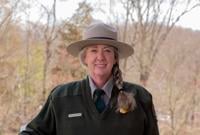
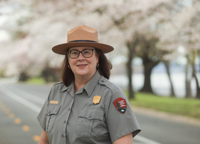
Cynthia MacLeod has been Superintendent of the Richmond National Battlefield Park and the Maggie L. Walker National Historic Site since May 1990. She has a master of architectural history from the University of Virginia and a bachelor's degree from Duke University. In 2003, she graduated from the Senior Executive Service training program of the Department of the Interior. She has worked for the National Park Service since 1980, previously in Philadelphia, Omaha and Ann Arbor, Mich.

Historical Publications Inc.
234 Monarch Hill Rd.
Tunbridge VT 05077


Our email address is:
mail@civilwarnews.com

Editorial, Subscriptions, Free Sample, and Advertising:
(800) 777-1862
Fax:
(802) 889-5627