
On Remembrance Day last November, I spent the last hour of daylight on the heights of Little Round Top. This knob of boulders and trees has become a regular, late day stop during my Saturday routine when visiting Gettysburg for the annual commemorative weekend.
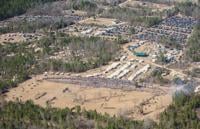
I looked down the western slope of Little Round Top, and below amongst the boulders of Devil's Den, I studied the landscape that the National Park Service is carefully grooming to an appearance of what it might have been in 1863. I could almost see the regimental lines, batteries of guns, horses and riders dashing about and a flag or two.
Nearer and just below me, a uniformed brass band played a variety of period tunes as the sun settled and the last of the day's meager warmth disappeared into the heavens much as the energy of the soldiers, who spent their last afternoon on earth there, did many seasons ago.
The martial and patriotic airs drifted out over the battlefield much as my thoughts about those soldiers drifted back through time. What were the twilights of the first days of July 1863 like on Little Round Top? Had anyone in November 1863 stood where I stood and pondered the events of that year which transpired in the fields and town laid out all around me?
Modern vehicles, small blobs on the park roads below, and park visitors walking near me, some in costume, faded into the increasing twilight. I was pleased that this vista still existed and also grateful that this battlefield would be preserved for years to come.
Unfortunately, many other important historical vistas have disappeared "" modern progress and neglect, ignorance and lack of resources or a host of other reasons "" the engine of time takes no pause.
I also wondered how many other costumed visitors (like me in my civilian wardrobe that day) who come to Gettysburg really grasp the historical details. And if they do not, how can they possibly interpret and describe the scenes for others ""particularly those who claim no or limited interest in history?
Preservation cannot be limited to only the terrain for maintaining a comprehensive historical tableau in our thoughts and the imaginations of the "audience" vacationers, buffs or scholars.
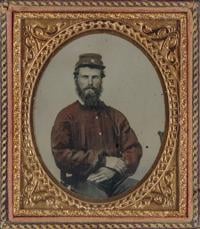
The things worn, eaten, carried, fired and hurled are another aspect of the presentation. Except for a few cannons and an occasional building these items are set off "" hopefully carefully housed in a museum, but likely in a collector's closet or someone's attic. Worse yet, lost to time and neglect long ago in a rubbish pile or abandoned trunk.
Many of the surviving material culture items related to the war are scattered about the country and greatly disconnected from the context of their utility.
Written remembrances, contemporary to the period, are extremely important as they form the script of the presentation. The impossibility of recordings of the participants' voices during the events makes the contemporary written record almost sacred. Those passages written by the participants during or immediately afterward are to be the most prized. It is from these we can almost "hear" the voices of the long gone participants.
In addition, when I think of "Civil War Battlefield preservation" I also like to include the relative non-military aspects. After all, these skirmishes and battles were placed by fate in the middle of and near peaceful towns and villages. The lives of thousand of families across the country were each day altered by the war. This social and material culture is worthy (and also necessary) of preservation.
So what should one do? My first suggestion is to join the Civil War Preservation Trust. Contributions to this effective organization provide a national focus for your personal preservation efforts. Then pick out a specific site (perhaps one that is local if you are so lucky) or cause (battle flag, memorial marker, etc.) and make financial as well time donations to it.
After that, look around at a local museum or historical society. Generally, there is at least one item on display or in its collection related to the war. In many cases the item might need conservation as well as preservation. Often the provenance may need clarification. Work with the curator or staff or just provide some extra funding.
If you are a collector or have items from your own family, properly handle, conserve, interpret and store or display the item(s). Spend time, money and energy on your own historic preservation education.
Letters and diaries also require the same efforts. There is any number of ways to share the information contained within these documents. Now, it is easy to post them online (with the proper documentation, of course). Write an article for one of the publications
Continue to donate to the organizations that preserve the land "" camp sites, bivouacs and battlefields. We should support institutions that house, conserve and preserve the "things" worn, carried, fired and used by the soldiers. This may be a national or state park with acres of land and arrays of objects, or a local museum with nothing but "Uncle Ned's canteen carried at the battle of . . ."
Individually, we can properly preserve a photograph or letter in our own possession "" save it, annotate it and if possible get it published (online, in an article or in a book) or donate it to a museum.
Our own historical education leads from just looking the part to being accurate in appearance and presenting a balanced and fact-based interpretation of the events. Too often some of us are passing on more myth than preserving a complete historical hologram of setting, props and actions.
When taken as a whole, there is still much connected with the Civil War that needs preserving. It is particularly important to those of us who interact "" informally, at an event or as volunteers or site employees "" to consider the land, the objects and the thoughts of the participants as a whole, as the idea of preservation is a whole concept and is tied directly to education.
Just as we now know that Pilgrims did not eat pumpkin pie or turkey at the first thanksgiving gathering, we surely want the knowledge of the events of the 1860s to be preserved in better fashion in 2063, 2163 or 2263.
Bill Christen is a retired automotive engineer who has taken up substitute elementary school teaching, among other things, since then. Among the "other things," he is the author of Pauline Cushman:Spy of the Cumberland (Edinborough Press) and has several other period projects in progress.
He is publisher of The Watchdog, a quarterly journal focusing on the material and social culture of the third quarter of the 19th century. The Watchdog Quarterly publishing company also offers books on the similar topics, including For Fatigue Purposes"¦ (out of print), Cartridge Making, The Civil War Musket and The Columbia Rifles Research Compendium (second edition).
Proceeds from these publications, and an occasional rifle-musket donated to battlefield preservation organizations for fundraising raffles, are given annually to various battlefield preservation efforts. He can be reached at (586) 558-5285, thedog@watchdogreview.com; www.watchdogreview.com