
Mill Springs Battlefield Revisited
By Gilbert Wilson
(April 2011 Civil War News - Preservation Column)

Bookmark and Share

Felix Zollicoffer surely never gave a second thought to the possibility that the next day would be his last as he accompanied what once was his army of East Tennessee up the Mill Springs Road toward a sleepy little hamlet in western Pulaski County called Logan’s Crossroads.

Zollicoffer and his commanding officer George Crittenden, the son of a famous Kentucky senator who had recently been given command of the army, were determined to march their Confederate troops north toward Logan’s Crossroads to surprise the vanguard of Federal troops commanded by a Virginian named George Thomas.

Thomas had been ordered to march from Lebanon, Ky., to Logan’s Crossroads and link up with forces coming west from Somerset. After the juncture, Thomas was to march down the Mill Springs Road and attack the Confederate camp that had been established north of the Cumberland River in Wayne County, Ky.

If Zollicoffer had stayed south of the Cumberland, then this engagement would never have occurred. However when he crossed the river and became a major threat to central Kentucky, Carlos Buell, the Federal commander in Kentucky, reacted.

 After Zollicoffer invaded Kentucky in the fall of 1861 and was checked at Wildcat Mountain north of London, Jefferson Davis sent Crittenden to take command of Zollicoffer’s Army. Perhaps Jefferson Davis felt that Crittenden, a West Point graduate and a Kentucky native, would command more respect from the Kentucky people and result in Kentuckians flocking to join the Confederate cause.

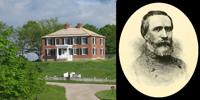
Zollicoffer had been a three-term Congressman from Tennessee and a member of the Whig Party. His real occupation was editor of the Nashville Banner and he was married to Louisa Pocahontas Gordon who claimed to be a descendant of the famous Native American princess.

He felt strongly that the union should be preserved if possible; however, he was also a member of the “Peace Commission” that had tried to meet with the Lincoln Administration to no avail.

After Tennessee seceded, the Governor of Tennessee asked Zollicoffer to take command of Confederate forces in East Tennessee. He agreed even though his only military experience was a short stint in the Seminole Wars.

Crittenden and Zollicoffer’s army march nine miles, from midnight to approximately 6 a.m. on a muddy road made worse by the movement of cannon, horses and the tramping of thousands of infantrymen. It rained, sleeted and snowed in different intervals.

They arrived tired, wet, hungry and scared. Most of them had never been in battle. To add to the problems, a heavy fog hovered over the ground which made visibility next to impossible.

A mile south of Logan’s Crossroads the Confederates ran into the advanced guard of Thomas’ army and the fight was on. With ravines on both sides of the road, Zollicoffer and the Confederates were forced to move straight up old Mill Spring Road.

Some Confederate commanders broke off from the main unit due to confusion caused by poor vision or extreme terrain and attempted to get around the Federal left flank which resulted in several failed charges against a split-rail fence which has become know as the “fight at the fence.”

Zollicoffer was behind the Confederate lines and unsure what was happening to his front, so he went to investigate. He rode up the old Mill Springs Road toward the sound of the fighting. He rode right into the Federal lines and encountered a Federal officer named Speed Fry from Danville, Ky. It is unclear exactly what happened next. Was it a mistake in identity or Zollicoffer realizing his mistake and trying to bluff his way to safety?

In any event the result was Zollicoffer’s death, which left the Confederate army leaderless. Where Crittenden was no one can tell for sure. The Federals eventually gained the upper hand and drove the Confederates back to their camps north of the Cumberland River. That night they crossed the river and retreated into Tennessee.

The Battle of Mill Springs was a Federal victory which opened the way to the invasion of East Tennessee and the fall of Nashville. It was the first breech in the Southern defensive line in the Western Theater of the Civil War.

However, because the Battle of Mill Springs was a small engagement early in the war it was largely forgotten as the years rolled by. The locals knew of the battle but few people outside the local area remembered.

Things changed when the National Park Service named Mill Springs one of the 25 most endangered battlefields in 1991. The Mill Springs Battlefield Association (MSBA) was formed in 1992 as a pilot program for battlefield protection. Its goal was to preserve, protect, maintain and interpret the battlefield.

In conjunction with the National Park Service, the American Battlefield Protection Program, Kentucky State Government, Pulaski County Government and the Kentucky Heritage Council, the MSBA was established as a 501(c)(3) not-for-profit governed by a volunteer board of directors. Local business man William Neikirk has served as president since its founding.

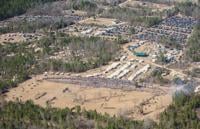
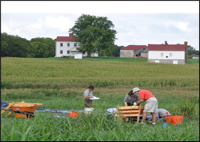
 Since 1992 the association has purchased and preserved nearly 500 acres of core battlefield property. In 2006 the MSBA opened a $2.2 million 10,000-square-foot Visitor’s Center and Museum. The MSBA also owns two historic houses that were part of the battle’s history.

The circa 1830 Brown-Lanier House was used as Confederate General Crittenden’s headquarters prior to the battle. After the battle Federal General Thomas use the house as headquarters where he wrote his after action report. It is presently a bed and breakfast and is well maintained.

The circa 1800 West-Metcalfe House is the oldest brick house in Wayne County. General Zollicoffer used it as his headquarters on the south side of the Cumberland River. In 2010 the house was fully renovated. Tours are available (606-636-4045).

The MSBA offers a 10-mile driving tour that includes numerous interpretative signs and over two miles of walking trails. The balance of the budget is raised by tours, gift shop sales and rental property.

The visitor’s center is currently open seven days a week from 10 to 4 and is closed only for Christmas, New Year’s, Easter and Thanksgiving. The MSBA currently employs three full-time staff and four part-time staff to help manage the battlefield and historic sites.

 On Jan. 21, 2012, the MSBA will host the sesquicentennial anniversary of the battle with a reenactment on the Mill Springs Battlefield. For more information on the reenactment, please call (606) 636-4045 or email info@millsprings.net.


Gilbert Wilson is the executive director of the Mill Springs Battlefield Association. He is a retired educator, coach, principal, and athletic director of the Pulaski County (Ky.) School System.