Brandy Station’s Advocates
By Clark B. Hall
(July 2010 Civil War News - Preservation Column)

Bookmark and Share

No matter how big or small, how famous or anonymous, it is a fact battlefields cannot speak for themselves.

From Gettysburg to Morton’s Ford, it proves axiomatic that any battlefield will inexorably be developed or desecrated unless some stout, unyielding entity steps forth and speaks on its behalf. And for more than 20 years, the Brandy Station Foundation has championed the preservation of the momentous Brandy Station Battlefield.

Today — thanks to a dedicated board, its members and our long, solid partnership with the Civil War Preservation Trust (CWPT) — the Brandy Station Foundation has helped to ensure that America’s largest and greatest cavalry battlefield is viewed, largely, as a saved battlefield.

And although we have scored signal victories after two decades of waging one of the fiercest preservation struggles in this country, the Brandy Station Foundation plans to stick around as long as we can.

Why? Very simply, Jeb Stuart and John Buford are not here to champion their huge battleground. So, along with CWPT, we will continue do it for them, as best we can.

Perhaps it is useful to recap why the Foundation will never, “Just go away, dammit!” — as one developer famously urged.

Back in the late 80s, a developer purchased thousands of acres in the heart of the battlefield and presented obscure plans for a “corporate industrial park.”

Timing, as they say, is everything, and fortunately for those of us who care about battlefields, the Association for the Preservation of Civil War Sites (APCWS) — led by Gary Gallagher and Bob Krick — had just formed, and we instantly appeared before Culpeper County land use officials as staunch advocates for Brandy Station.

APCWS helped to found the Brandy Station Foundation (BSF) in 1989, and, to make a long story short, BSF found itself forced to court in an effort to halt development schemes that would have completely destroyed the battlefield.

Litigation ensued against the developer, and once he folded into bankruptcy, another developer came along with bizarre plans to build a Formula One racetrack on the battlefield.

(This “visionary” once asked if I could “just imagine the historical synergy between F-1 racers and cavalry horses?” My reply: “Do you know how perfectly ridiculous you are?”)

In 1993, the National Trust for Historic Preservation placed Brandy Station on its “Most Endangered Places List,” and nationwide support for the salvation of Brandy Station poured in from Civil War Round Tables; living history groups; the Piedmont Environmental Council; SUV, SCV and UDC camps; a fifth grade class in Manhattan, Kan.; as well as thousands of individual citizens from across the U.S., U.K., Germany and Australia. (The “axis of good.”)

And although we received generous monetary and moral support from diverse sections, BSF alone was forced to file suit against the misguided racetrack zealot.

Soon, mercifully, this fellow also went into bankruptcy. (He was last seen speeding north on I-95 in his black SUV, tail between his legs.) No tears were shed for either developer when they skedaddled to California and New York, respectively.

Then again came APCWS — soon known as the Civil War Preservation Trust — and CWPT purchased (for millions of dollars) major portions of the battlefield, to exceed 1,500 acres.

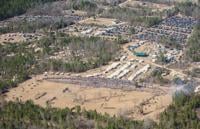
In 2003, on the 140th Anniversary of the Battle of Brandy Station, CWPT and BSF heralded the grand opening of the “Brandy Station Battlefield Park.”

CWPT created (and paid for) extensive hiking trails and interpretive signs throughout the battlefield. Now instead of hotrods careening around Buford’s Knoll, we now witness families with small children in tow, happily skipping over this great, untouched battlefield.

Talk about a validating, rewarding sight.

Utilizing its own resources, and in occasional partnership with CWPT, BSF has also purchased threatened land on the southern plateau fronting Fleetwood Hill — thereby thwarting efforts of a residential developer to erect “McMansions” on a portion of the battlefield that witnessed heavy fighting and casualties.

BSF also owns vital ground at Kelly’s Ford, the most famous river crossing on the eastern theater’s most significant river, the Rappahannock.

So, you may ask, “What have you done for us lately?”

That’s a fair question and, after 20 years, our little non-profit organization (no paid staff; all volunteers), is in the process of developing an even bolder strategic mission.

Preservation organizations can only succeed through dynamic, vigorous growth, and considering the sad consequences if BSF does not succeed, we are deeply committed to expand our membership and donor base.

And grow we must in order to continue to do good work on behalf of all the Civil War soldiers who fought and died in Culpeper County.

Culpeper, after all, is the most fought over, marched upon and camped upon county in this country, and there are dozens of Civil War assets and resources in Culpeper that require concentrated focus to ensure their protection via acquisition or easement.

We are often amazed that when visitors tour our headquarters at the Graffiti House in Brandy Station, they are generally unaware that the significant Battles of Cedar Mountain, Morton’s Ford, Freeman’s Ford and Kelly’s Ford also took place in Culpeper.

Additionally, the Second Manassas, Gettysburg, Bristoe Station, Mine Run and Overland Campaigns began in Culpeper, and the Army of the Potomac’s threshold winter encampment of 1863-1864 took place in Lord Thomas Culpeper’s namesake county.

As the Sesquicentennial approaches, who will speak and advocate on behalf of Culpeper County’s unequaled Civil War resources? You have already conjured the answer to that question: At every forum and meeting imaginable, the Brandy Station Foundation will indeed be heard from in the months and years ahead.

But now that we choose to expand our advocacy voice, does this mean BSF will ignore Brandy Station? Not on your life…

There are, after all, thousands of acres on the Brandy Station Battlefield that remain in private hands, and we will continue to work closely with our longest and best partner, the Civil War Preservation Trust, to secure by acquisition and easement as much as historic acreage as humanly possible.

CWPT’s President James Lighthizer once noted: “Brandy Station … is a living monument to the courage, valor and sacrifice of our forbearers.” Jim then added, “Few landscapes so closely resemble conditions as they existed during the Civil War.”

And in recognizing BSF’s tireless, relentless efforts to preserve this greatest of all American cavalry battlefields, Mr. Lighthizer lauded “the vigilance and determination of the Brandy Station Foundation and its leadership.”

We are certainly honored at such praise, and BSF labors to remain worthy of the trust and confidence placed in us by thousands of citizens over the years.

We now urge you to join (or rejoin) the Brandy Station Foundation so that the Brandy Station Battlefield and Culpeper County’s matchless Civil War resources will always retain a firm, polite and local voice.

Please “saddle up” alongside us, stirrup to stirrup, for the long, vital campaign ahead:

www.brandystationfoundation.com. You can also e-mail, director@brandystationfoundation.com or call us at (540) 727-7718.


An early member of the APCWS Board, and original founder of the Chantilly Battlefield Association and Brandy Station Foundation, Clark B. Hall was recently elected as President of BSF for the second time. He was married to Deborah Fitts, Assistant Editor, Civil War News. Deborah died of breast cancer July 17, 2008, and her husband misses Deb every single minute, of every single day.