Historic Fort Mifflin
By Mike Cavanaugh
(November 2008 Civil War News - Preservation Column)
Guarding the Delaware River in Philadelphia is historic Fort Mifflin. Built in 1771, by the British, the fort now lies in the shadow of the I-95 Girard Point Bridge and next to the sprawling Philadelphia International Airport.
The fort was called Fort Mud or Battery Island until occupied and construction was completed by the Americans. After the Revolutionary War, it was named Fort Mifflin for Thomas Mifflin, the former Quartermaster General of the American Army and governor of Pennsylvania.
The fort played a key role in America’s fight for independence. The winter of 1777 was a bitter and bleak one for George Washington’s struggling army. The British occupied Philadelphia and all that stood between the suppression of the revolt of the Colonies was Fort Mifflin.
British general William Howe’s fleet of warships attempted to sail up the Delaware River with fresh supplies and reinforcements to finish off Washington’s battered army. For weeks the Redcoats attempted to sail past the fort’s roaring guns.
The massive armada of some 240 gunships blasted away at the fort for six bloody weeks. This was the greatest bombardment ever in North America. This gallant defense enabled Washington’s army to recover during the winter at Valley Forge and live to fight another day.
The defenders, due to overwhelming British numbers, were forced to abandon the fort. This made defense of Fort Mercer, a sister fort on the New Jersey side of the river, untenable. This opened the Delaware River for the British all the way to Philadelphia. But the brave American defenders – taking over 250 casualties — had done their job.
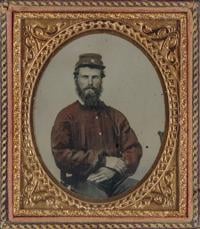
During the Civil War Fort Mifflin was used mainly to house Confederate POWs and Union soldiers under arrest. Several hangings of Union solders convicted of murder and other crimes occurred. The most famous case was the execution of Pvt. William H. Howe of the 116th Pennsylvania Infantry of the famed Irish Brigade.
In December of 1862, at the battle of Fredericksburg, Howe was injured trying to drag wounded comrades back to the Union lines. He was sent to a hospital and after a few weeks he left the hospital and walked home to Pennsylvania to recuperate.
Hunted down for desertion he was arrested in June 1863. During the arrest a standoff occurred at Howe’s home and a man was shot and killed. Howe fled and was arrested about a month later in Reading, Pa. He was put on trial for desertion and murder.
Desertion in the Union army – especially in Pennsylvania – was at epidemic levels and the army wanted to make an example of Howe. At the first of two trials Howe was found guilty of desertion, but not murder due to “lack of evidence.” At his second trial he was found guilty of murder (no double jeopardy in military trials) and sentenced to be hung.
Held at Fort Mifflin for several weeks, Howe made an unsuccessful escape from Casemate #11. He was moved to Eastern State Penitentiary in Philadelphia until his date of execution. On Aug. 26, 1864, Private Howe was executed near the Wooden Guard House at the fort.
He had the distinction of being the only person ever executed by the U.S. Army where tickets were sold to the public. The sad part of this story is that Howe sent two letters to President Lincoln asking for clemency.
One year later to the day after Howe’s execution, President Andrew Johnson, not knowing of Howe’s execution, commuted his sentence to time served.
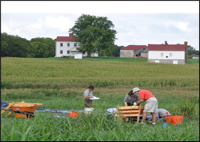
The recently excavated Casemate #11 found some remarkable evidence of Howe’s time there. The walls and doors showed his signature among graffiti scrawled by other prisoners. Other artifacts found – not necessarily Howe’s – were a tin cup, period buttons, a 1864 wine token and a 1864 penny in excellent condition.
Fort Mifflin was used as a military fort until 1954. When it closed it was the oldest fort in continuous use in the United States. After the Civil War it was used mostly as an army supply base and a base for the Army Corps of Engineers gaining in importance, of course, during the Spanish-American War and World War I.
During World War II, anti-aircraft gun emplacements were set up to protect the nearby Fort Mifflin Naval Ammunition Storage Depot and the U.S. Naval Shipyard. In 1962, Fort Mifflin was deeded to the City of Philadelphia by the army and the city soon turned over the maintenance of the fort to the private organizations caring for it today.
Still maintained by paid staff and a host of volunteers, the fort is a beehive of activity from March through November. School groups, scout troops and, of course, lots of reenactment and living history events from Revolutionary War to Viet Nam fill most weekends during the season.
There is also a volunteer organization named Olde Fort Mifflin Historical Society that is a separate organization but works closely with Historic Fort Mifflin. They are very active assisting in the scheduling and running of events.
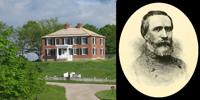
Most of the exiting buildings are carefully restored and accurately furnished with Rev War bunks, accouterments, etc. Other buildings include an arsenal, artillery shed, a blacksmith shop, soldiers’ barracks, officers’ quarters, the Commandant’s House (Citadel), a hospital and, most interesting, six casemates.
Built as defensive structures in the event of an enemy siege, these six cavelike structures were built from 1798-1801. Casemate #11, Private Howe’s prison cell, was recently unearthed during construction at the fort.
The fort is open all year round, Wednesday through Sunday, 10 a.m. to 4 p.m., but the most activity for visitors, tours and events, takes place from March to November. The admission fee is $6 for adults, $3 for children under 12, with children under 5 admitted free.
For information on tours and a schedule of events call (215) 685-4167 or contact the fort at: Fort Mifflin and Hog Island Roads, Philadelphia, PA 19153. Visit their informative and excellent Web site at www.fortmifflin.us. Memberships are available starting at $40. Fort Mifflin is a 501(c)(3) non-profit organization and all donations are tax deductible.
I would sincerely like to thank Fort Mifflin Executive Director Lee Anderson and his staff for their help with this article. Director Anderson states that the fort receives one-half of its support from the public. Other support comes from donations from foundations and private corporations.
So support from the public is vitally important care and maintenance. Make plans to visit Historic Fort Mifflin soon and be sure to bring the youngsters in the family. What a great field trip for your Civil War round table!
Mike Cavanaugh is the founder of the Civil War Book Exchange now Civil War News. He is a past president and founding member of the Old Baldy Civil War Round Table of Philadelphia and an Honorary Member of the Military Order of the Loyal Legion of the United States. He has authored and co-authored five books on the Civil War and has appeared on many Civil War round table programs over the past 30 years. He reviews books for Civil War News and is a strong supporter of the Civil War Preservation Trust and historic preservation. Mike is now the Regimental Commander of the Civil War Round Table of Eastern PA, in charge of scheduling programs throughout the year. He lives in Bethlehem, Pa. with his wife Susan. |