
The Battle Of Shepherdstown
Ed Dunleavy

July 2008 Preservation News


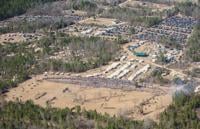
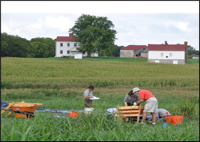
The current battle of Shepherdstown is being waged in the courts of West Virginia. It began mid-October 2004, when a posted sign announced filing of an application for a Conditional Use Permit (CUP) to build 152 houses on a 123-acre farm in a rural section of Jefferson County.

Neighbors were shocked by the sign for three reasons:
1) The farm was in area zoned “Rural” that, generally, limited the density of development to one house per 10 acres;

2) In the late 1990s, residents near the farm had been asked by its owners if they would agree to allow a dense residential development and the response had been an emphatic “NO”;

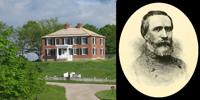
3) the farm was in the core of the Sept. 19-20, 1862, Battle of Shepherdstown site and included a 200-year-old farmhouse with a cannonball in one wall.

After the CUP application filing, the farm was sold to a Maryland-based real estate developer who named it Far Away Farm, although it was known as the Osbourn farm in 1862 when James Osbourn owned it.

After researching the zoning ordinance and speaking with several attorneys, neighbors formed an organization that became the Shepherdstown Battlefield Preservation Association Inc. (SBPA).

Their attorney found that the county’s zoning ordinance was seriously flawed in that it allowed a highly dense development in the Rural zone and it all but ignored history.

SBPA filed a 200-page document with the Jefferson County Board of Zoning Appeals (BZA) challenging the application for the Conditional Use Permit.

During the next 10 months, SBPA and its attorney participated in a number of public hearings and filed legal appeals challenging several BZA decisions.

In August 2005, the BZA denied the application, citing roads as too narrow and unsafe for dense residential development and the proposed development as not compatible with the neighborhood, which averaged 14.7 acres per lot.

History played no role in the decision.

At the same time, SBPA began enlisting the help of historical groups and others to aid in saving and preserving about half of the approximately 640-acre battlefield.

SBPA was able to garner support from the Civil War Preservation Trust (CWPT); the American Battlefield Protection Program of the National Park Service; John Howard, Superintendent of the Antietam National Battlefield Park; Dr. Thomas Clemens and the Save Historic Antietam Foundation Inc.; and other historians, county and state groups and officials.

For those unfamiliar with the Battle of Shepherdstown, a brief description follows. The battle took place over about 1 square mile approximately 1.25 miles east of Shepherdstown in western Virginia. It has been known as the Battle of Boteler’s, Blackford’s, Packhorse or Shepherdstown Ford for the historic ford across the Potomac River. It has also been called the Battle of the Cement Mill because of the proximity of Henry Boteler’s Cement Mill.

Calling it The Battle of Shepherdstown removes the confusion and we’ve discovered that more people recognize the battle under that name.

It was the last battle of the Confederate Army’s Maryland Campaign. Many will say that it was really the end of the Battle of Antietam. It occurred in the late afternoon of Sept. 19, 1862, and ensued the following day for about five hours.

The fighting on Sept. 19 consisted of an artillery duel and retreat by the Confederate forces from the south bank of the Potomac River. On Sept. 20, the Confederate infantry returned and met the Union Army about a mile and a half south of the river.

The two armies fought as the Union forces retreated north across the Osbourn farm back to the Potomac. Nine thousand troops were involved with 677 casualties. Principal Confederate generals included Thomas “Stonewall” Jackson, A.P. Hill and William Pendleton. The generals of the Army of the Potomac’s Fifth Corps were George Sykes and James Barnes.

While the significance of the battle pales in comparison to the Battle of Antietam, its importance is not tactical but strategic.

Gen. Robert E. Lee intended to have the Army of Northern Virginia re-enter Maryland via a ford near Williamsport and continue the Maryland Campaign.

Instead, it was the Battle of Shepherdstown that convinced Lee that George McClellan’s army was aggressively pursuing his retreat from Antietam. This perception resulted in a change in plans and the Army of Northern Virginia changed direction and retreated further up the Shenandoah Valley.

Ironically, McClellan was removed from command because he did not pursue Lee aggressively.

The current battle of Shepherdstown resumed in November 2005 when the developer filed an appeal with the West Virginia Circuit Court asking for a reversal of the BZA denial of the CUP application.

During 2006, United States Sen. Robert C. Byrd agreed to help SBPA in saving the battlefield. The farm was put up for sale, but SBPA’s offer to purchase it was rejected without a counter-offer.

SBPA aided Jefferson County in receiving a $100,000 grant from the state to purchase land on the battlefield site and the CWPT agreed to supply the necessary matching funds.

In September 2006, the Circuit Court upheld the BZA’s denial of the CUP application. By December, SBPA had aided in the closing of the last of three conservation easements totaling 84 acres granted by members who own battlefield land.

As expected, in early 2007 the developer filed an appeal with the West Virginia Supreme Court of Appeals (WVSCA) asking for a reversal of the Circuit Court decision and again the attorneys for SBPA and the BZA responded.

At mid-year, Senator Byrd introduced Senate Bill 1633, beginning the process that could lead to the Shepherdstown Battlefield being included in an existing National Park, either Antietam or Harpers Ferry.

Late last year, the Jefferson County Commission established a fund of $100,000 to purchase land within the battlefield. In November 2007, Schroeder Publications published the first full-length account of the battle, Shepherdstown: Last Clash of the Antietam Campaign September 19-20, 1862, by Thomas A. McGrath. (The book is a 256-page account with more than 80 related photos, illustrations and maps. Copies are available via SBPA’s Web site.)

In April 2008, the Supreme Court reversed the Circuit Court’s decision and ordered the Jefferson County Planning Commission to grant the CUP.

This order defies logic and the law because the Jefferson County Planning Commission was neither a party to the decision to deny the CUP nor a party to any of the appeals.

The WVSCA is thought to be highly political and has a reputation of ignoring the law in making decisions that the justices believe will result in their re-election. Jefferson County is one of the few counties within West Virginia that is growing and many in state government outside the county believe that residential growth in the county will send more tax dollars to the state government.

While the credibility of this court is already low, their citing the false assertion of the developer’s attorneys that a battle never happened on the farm as one reason for their decision defies logic.

The attorneys for SBPA and the BZA have filed documents asking the WVSCA to reconsider its decision. If the WVSCA does not reconsider, the SBPA attorney is looking into the means of filing an appeal in the Federal Courts.

SBPA has a membership of about 130 who have helped in the legal fight to save the battlefield. More than $70,000 has been expended with no end in sight. So far, the grants can only be used to purchase land; SBPA’s operating expenses, which are 98 percent legal fees, are being solely supported by the membership.

Please visit our Web site at www.battleofshepherdstown.org for more information.

Ed Dunleavy retired after 32 years on “Wall Street” having worked in New York, Chicago, Denver and London, England. Attracted by the county’s history and rural nature, he and his wife, Carol, moved to Jefferson County in 2003. With about 30 neighbors, they founded SBPA and have served as president and secretary, respectively since its inception.