
Civil War News
For People With An Active Interest in the Civil War Today

Georgia Plans Civil War Trail
By Joe Kirby
MARIETTA, Ga.

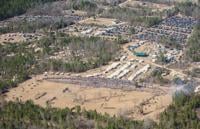
Resaca, Georgia's newly acquired Civil War battlefield, will soon be a state park. But preservationists also envision it as an anchor of a string of parks and heritage-related sites on a driving tour that will follow the route taken by Union Gen. William Tecumseh Sherman as he maneuvered toward Atlanta in 1864.

A well-defined trail of that type along the Interstate 75 corridor easily could mean millions of dollars in new annual revenue for communities and businesses along its route. It's an eminently achievable goal, according to Dr. Phil Secrist of Marietta, a member of the Georgia Civil War Commission who is heading that group's committee on such trails.

Georgia's plan is to follow the path blazed by Virginia, which in 1995 launched the Lee's Retreat Trail from Petersburg to Appomatox. That trail is attracting more than 15,000 visitors a year and in 1998 reportedly generated an estimated $1.1 million for Petersburg and the seven counties along the route. Lee's Retreat Trail has been such a success that Virginia now has four other Civil War-related trails in other parts of the state.

Not only are such trails popular, those who follow them and visit the sites tend to be a demographically desirable group -- aging baby boomers with money to spend.

"We expect that the hotels and motels and restaurants and chambers of commerce along the way will really embrace this," Secrist said.

His committee will pick a consultant this spring for a six-month feasibility study of such a trail. Funding for the project will come from $112,000 granted to the commission last year by the state legislature.

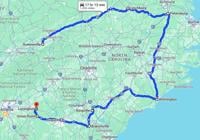
Secrist, who has been pushing for such a trail since his late 1980s days as chairman of the Cobb County Board of Commissioners, foresees a trail that would start in Ringgold near Chattanooga and wind its way south to the Atlanta area.

Most of the sites would be within the narrow route taken by Sherman, who for the most part stayed close to his supply line -- the Western & Atlanta Railroad (now the CSX). Another advantage for such a trail is that the rail line, and Sherman's route, now are paralleled by Interstate 75, the busiest interstate in the country.

Among the sites likely to be included would be the wartime railroad depot at Ringgold; the railroad tunnel at Tunnel Hill and the nearby Clisby Austin House used by Sherman as a headquarters; the Crow Valley defense line near Dalton; the Dug Gap battlefield; the Resaca battlefield and Confederate Cemetery; Barnsley Gardens in Bartow County; the remains of Cassville; and the Allatoona Pass Battlefield (though not formally part of Sherman's Atlanta Campaign).

Proceeding southward, the trail might include the New Hope Church battlefield in Paulding County; the site of the Battle of Dallas; the Pickett's Mill Battlefield State Park; the sites of the bloody division-sized Gilgal Church and Pine Knob battles that took place simultaneously a few miles west of Kennesaw Mountain a few days before Sherman's main assault; nearby Pine Mountain, scene of the death of Confederate Gen. Leonidas Polk; and the Kennesaw Civil War Museum and the locomotive "The General" of Andrews' Raiders fame in downtown Kennesaw.

Other sites might include the French's Hill battlefield (also known as "Hardee's Salient") near the Marietta Country Club; houses used as headquarters by Gens. Joe Johnston and O.O. Howard along Burnt Hickory Road; Kennesaw Mountain National Battlefield Park; the Cheney House on Powder Springs Road, used as a headquarters by Gen. John Schofield; the Marietta National and Confederate cemeteries; the Ruff's Mill battle area near Smyrna; and the remains of "Johnston's River Line," a near-impregnable line of earthworks guarding the crossings of the Chattahoochee River near Mableton. About 80 acres of the trench line is owned by Cobb County.

The tour route would continue into Atlanta to the Peachtree Creek battle site; the Atlanta Cyclorama; the Utoy Creek battlefield; Oakland Cemetery, burial place of more than 3,000 Confederate soldiers and "Gone With The Wind" author Margaret Mitchell; the Jonesboro battlefield and Confederate Cemetery; and thence back northward to view the antebellum mansions of Roswell.

More than 40 sites have been proposed for inclusion, though Secrist foresees using only 25 or 30.

"We've got three criteria we're using," Secrist said. "They must be accessible by road, must have been significant to the Atlanta Campaign, and must have something for visitors to see."

Secrist's eight-person committee of commission members was to make a trial run of the tour route on April 6, measuring distances and travel times. But it will be two to three years at best before the trail is open to the public.

The Civil War Commission is just dipping its toe in the water, so to speak, with the Atlanta Campaign Trail. Ultimately, there will be trails following Sherman's March to the Sea, Confederate President Jefferson Davis' unsuccessful flight from his captors at war's end, Union Gen. James Wilson's 1865 cavalry raid and captures of Columbus and Macon, and trails to Civil War sites in northeast and south Georgia. There's also the opportunity for heritage trails telling the story of Georgia's railroads and Indian heritage.

Use these links to navigate on CWN's web site

Home/ Calendar/ News/ Opinion/ Book Reviews/ Civil War on the Internet/ Living  History/ News Briefs/ Subscriptions/ Testimonials/ Artillery Safety/ Feedback/ Links

Historical Publications Inc.
234 Monarch Hill Rd.
Tunbridge VT 05077

Our email address is: mail@civilwarnews.com

Subscriptions: (800) 777-1862
Free Sample: (800) 777-1862
Display Ads: (800) 777-1862
Editorial: (802) 889-3500
Fax: (802) 889-5627