
John Cissell Retires; Reflects on Kennesaw Past & Future
By Joe Kirby
January 2005
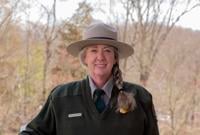
KENNESAW, Ga. - John Cissell, superintendent of Kennesaw Mountain National Battlefield Park (KMNBP), retired Jan. 3 after 12 years at the park's helm.
"I was always a little bit concerned when I came here that I would have a problem with a mayor or a senator or a congressman and that the Park Service would move me along somewhere else," said Cissell, who spent 32 years working for the National Park Service. "I thought I would be lucky if I stayed here four or five years."
Instead, he became almost an institution in the metro Atlanta area where his pending retirement was front-page news in local newspapers.
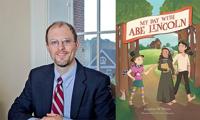
Cissell's departure at age 55 culminates more than a century's worth of service to the park system by three generations of his family. His grandfather - also named John Cissell - served as caretaker and superintendent of the Abraham Lincoln Birthplace near Bardstown, Ky., from 1897 to 1950 and helped Teddy Roosevelt lay the cornerstone for the memorialbuilding there in 1909. His grandmother was the park's unofficial secretary.
"My grandfather was originally hired as the superintendent because they couldn't find anyone else around there to cut grass and do tours," Cissell said. In the 1890s Cissell's grandfather owned 70 acres of the original Tom Lincoln farm, now part of the national park.
Cissell's father worked there as well and at the time of his death in 1970 was a technician at Vicksburg National Military Park.
The current John Cissell mowed the lawn at the Lincoln site as a youth, then joined the Park Service in 1972 after a tour as a military policeman in the Marines. He began his career at Mammoth Cave National Park, was stationed at King's Mountain (Revolutionary War) National Battlefield Park in South Carolina, was chief ranger at Chickamauga and then came to Kennesaw Mountain in 1992.
Cissell's health played a role in his decision to retire. He was diagnosed as a diabetic a decade ago and dropped 40 pounds, but since 2000 has broken his hip, his pelvis and his back on separate occasions (none of them work-related).
Though he's still vigorous enough to climb the mountain and fell trees, he was just one of five people chosen from a field of 1,000 applicants to be part of a revolutionary islet-cell transplant experiment at Emory University Hospital in Atlanta. The cells are harvested from the pancreas of a deceased donor, then injected into a diabetic's liver. They then jump-start the production of insulin and reverse the diabetes permanently.
The Battle of Kennesaw Mountain was a frontal assault, not a siege, but Cissell's successor as superintendent may well feel besieged by an army of problems and challenges.
The park will enter its seventh decade next summer and will do so under an onslaught from all sides, a victim of both its own success and of the continuing suburbanization of its surroundings. It was been visited by nearly 1.4 million people in 2004 and typically ranks second or third among the nation's battlefield parks, behind Gettysburg.
That number does not include the 14 million people per year who drive through the park without stopping - roughly 160,000 vehicles per day squeezing through on two-lane commuter corridors.
"It's tough to have a neat National Park experience with that much traffic," said Cissell. Indeed, Cissell was at the forefront of those preventing the widening of Dallas Highway through the park, and his successor can be expected to play a similar role. That's because the park's goal - preserving as much of the battlefield as possible - is at loggerheads with local officials' desire for the park to relinquish more right-of-way for pavement.
"People are just going to have to look at mass transit. Road widenings don't answer problems," he said.
His outspokenness on that topic and others did not endear him to local officials and developers. And as land along the park's perimeter keeps rising in value, developers are having to squeeze more houses onto their acreage in order to cover their land costs.
"That puts a tax on the schools and transportation system and on the historic scene as well," Cissell said.
Maintaining that historic viewshed is a losing battle. A decade ago, a visitor atop Kennesaw Mountain was confronted by metro Atlanta to the east and south, but looking north and west saw a verdant panorama little different from what a Confederate soldier would have seen in 1864. Now, that greenery is disappearing fast beneath wide roads, subdivisions, power transmission lines and warehouses.
"This park has been a real asset for this area, but so often the mandate of the park runs contrary to what the city and county are trying to do," Cissell said.
The park is the largest publicly owned greenspace in the Atlanta area. Its visitation figures would be higher were it not for the opening in 1999 of the 37-mile-long Silver Comet Trail recreational park along an abandoned railroad right-of-way a few miles from the park's southern border.
"And the county's parks chief in the early '90s didn't even want it!" Cissell remembers, an incredulous tone in his voice. "They turned down a $45,000 National Park Service planning grant because they said they wouldn't be able to maintain it! Meanwhile, we were having all kinds of problems with bikers and roller skaters and skateboards. Now, the Silver Comet Trail is a phenomenal success and it has taken a lot of pressure off us."
"We don't want to have as many people out here as we can cram into the park," he said a month before his retirement. "We just want the ones who do come to have a good experience while they're here."
Park expansion is sure to be high on the next superintendent's list. Cissell brought in several adjacent parcels during his tenure but was unable to persuade the owners of several others to sell (such as the Hays farm on Dallas Highway now being developed).
Other areas are still being eyed, some to "square up" the park boundaries and others due to their historic nature. The historic Wallis House on Burnt Hickory (headquarters of Union Gen. O.O. Howard) has been purchased by Cobb County, hopefully for inclusion in the park, and the park and county are considering a plan that would see rangers developing trails and staffing a park on the county-owned portion of Johnston's River Line of Confederate entrenchments along the Chattahoochee River just south of Kennesaw, Cissell said.
Cissell also was successful in the past several years in blocking plans for a convenience store across Callaway Road from the historic Kolb Farmhouse, which would have resulted in the store occupying one corner of a busy intersection and the park the other three. State Greenspace money and local dollars were used to acquire the four acres in question and add them to the park.
The park also needs a satellite visitor center at the southern end of the park, perhaps in the Kolb Farmhouse or in rented space at a nearby shopping center, Cissell said. The park's official driving tour now ends at the farmhouse, which actually is where it should begin so that visitors can follow the battle chronologically. But there's no easy way of routing a driving tour on congested local surface roads to achieve that, he said.
"It's just not right to send a visitor from California or Florida out into the traffic around here and expect them to try and sight-see at the same time," Cissell said.
Though the park this year began charging a small sum for rides on a shuttle bus to the top of the mountain, Cissell said he's against charging visitors to park, despite the fact that parking space is usually at a premium.
"Somehow, it just rubs me the wrong way to think that we would charge people to go in and learn about Civil War history and the Atlanta Campaign," he said.
Such questions presumably will be answered in the management plan now in the early stages of being drawn up, the park's first since 1979.
"It's going to set goals for the next 20 years and get us through the 150th anniversary of the battle in 2014," Cissell said. "If this park is ever going to get to the point where we want it to go, it will be in the next 10 years as we get ready for that."
Cissell explained that the park was never fully developed. "It was set up in the early 1930s and they had all these plans, but then World War II came along and afterward they never finished it," he said. "We don't have many interpretive signs, for example. We have miles and miles of earthworks, with no explanation to visitors about who dug them or when or why. There's so much out there that we're not telling."
Another early plan that never came to fruition, Cissell said, was that the Blue Ridge Parkway would have a terminus at Kennesaw Mountain, which is the southernmost peak of the Appalachian Mountains.
The park has been plagued in recent years with "social trails" - unauthorized trails blazed into the park from private property.
"Private access to public property is illegal," Cissell said. "Plus, if they build a trail and we know it's there and something happens to someone on it, we can be held negligent."
KMNBP had 51 such trails at one point until Cissell ordered them blocked, which made many of the park's neighbors livid.
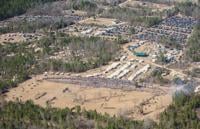
A highlight of his term was overseeing the $3 million fundraising drive and construction of a new visitors center to replace the outmoded, shoebox-sized center built in 1963 for the Civil War Centennial. But like its NPS counterparts, Kennesaw Mountain has suffered from continued budget and staffing cuts even while visitation continues to soar.
"There are 84 units in the NPS system, and we all have needs and we all have to compete for funding and attention," he said.
How tight is the KMNBP budget? So tight that Cissell last year gave up the government car he had been provided, choosing to use the money for other purposes.
But despite such problems, being superintendent was great fun, Cissell said.
"We have talked about the mission of the park and why it's worth protecting. I hope by the time it gets to 2014, the word on the streets will be, 'Don't mess with Kennesaw Mountain. It's too important.'"
If that ever happens, it will be because Cissell and others have done so much to lay the groundwork.