
Local Effort Begins To Enlarge Missionary Ridge Reservations
By Gregory L. Wade

(November 2010 Civil War News)

Bookmark and Share

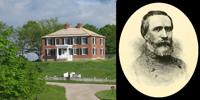
Much of the Missionary Ridge commemoration is in residential neighborhoods, such as these markers at the south edge of Ohio Reservation, one of the small parks on Crest Road.    
(Gregory L. Wade photos)

CHATTANOOGA, Tenn. — One hundred and forty-seven years after the Battle of Missionary Ridge to free Chattanooga from an infamous Confederate siege, citizens and historians are working to enhance and expand the interpretative sites of this often overlooked battlefield.

Today, the ridge which runs from Georgia north along the eastern side of downtown Chattanooga, is covered with 100-year-old homes known more for their spectacular views of the city and its surrounding areas than the Nov. 25, 1863, battle up its steep slopes.

Neighborhood groups and government officials are looking into adding acreage to the four “reservations” along the ridge crest and seeking Congressional approval for changing park boundaries. They hope such legislation will be filed in January.

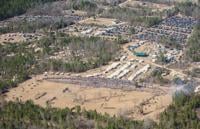
Made up of a few acres each along what today is Crest Road, these       reservations are essentially small mini-parks managed as part of Chickamauga & Chattanooga National Battlefield. Park Service personnel patrol and maintain the reservations.

While there are numerous markers, even cannon, in some  front yards, the small parks are basically islands of history in the midst of residential development. Going north on Crest Road, they are known as the Bragg, Ohio, De Long and Sherman Reservations.

“There is virtually unanimous support among the various homeowners groups and the Chattanooga City Council to pursue additional land,” says Peter Murphy of the Missionary Ridge Neighborhood Association (MRNA). Murphy also is a member of the Chattanooga City Council. 

After the Confederate Army of Tennessee defeated the U.S. Army of the Cumberland only a few miles south of Chattanooga at Chickamauga, Ga., in September 1863, U.S. General William Rosecrans’ defeated command retreated across the Georgia state line toward Chattanooga, which they reached Sept. 20.

When the Confederates surrounded Chattanooga, which they had abandoned, they occupied the heights around the city, including Missionary Ridge and Lookout Mountain. The siege of over two months created misery for the Union troops who were fed only by a meager supply source known as the “Cracker Line.”

Soon the Federals sent reinforcements and a new commander, Gen. Ulysses S. Grant. In late November, Union troops attacked and achieved a hard-fought breakout across Missionary Ridge resulting in the series of battles all the way to Atlanta in the months ahead.

Today many of those critical ridge battlegrounds are hard to see from the valley below as they are hidden by trees.

To be able to “see the monuments rising up on the ridge will change people’s consciousness as to what happened here,” says Murphy. Now it is mostly left up to one’s imagination to visualize what took place on these slopes, he adds.

With additional land much of the view from the valley below could be restored making for a better understanding of the story of Chattanooga during the War.

The Trust for Public Land (TPL) has been working with MRNA and other neighborhood groups, local and state officials to determine what interest landowners would have in selling their properties to “enhance and expand the reservations.”

TPL is a national organization dedicated to conserving “land for human enjoyment and well being, from inner city to wilderness,” according to its Web site.

TPL’S Rick Wood says any additions would have to be approved by Congress, even if the ground were donated.

Wood and Murphy are emphatic that any land purchases would be from willing landowners and there “would be no condemnation.”

 Wood says “strong local support is the first step in this process, which we now have.” Tennessee U.S. Senators Bob Corker and Lamar Alexander and Chattanooga area Congressman Zach Wamp learned that local residents and neighbors support the effort when they were briefed by TPL.

“Local support was critical for Congressional support,” Wood says.

The neighborhood groups, which also include Battery Heights Neighborhood Association and the Orchard Knob Neighborhood Association, have issued letters of support for the continued pursuit of the plan.

Noting it is not often a project receives such backing, Murphy says he hopes the Federal legislation will be filed as early as January to begin the process of potential boundary “change actions.”

“These new additions would come with a lot of study from National Park Service historians,” says Wood, “and would give those with homes in the area an idea of how the new lines known as ‘minor boundary adjustments’ would play out.”

He says it is much too early to determine any costs as appraisals and desired properties have to be mapped out. When Congress does approve the boundary changes and purchase agreements are ironed out, funds will come through the Federal Land and Water Conservation Fund.

Getting the legislation passed will begin the process of narrowing down what parcels and what boundaries will change and will be a time-consuming process, says Wood.

“These things take time, sometimes years, but we are excited about how the fighting on Missionary Ridge will be interpreted in the future.”

The enthusiasm of the various associations and the City Council will make the process with the National Park Service and Congress much easier, Murphy says.

Optimistic that Congress will move forward with funding studies, Murphy notes, “This is what the right timing and what people with vision who are willing to work for something can do.”

To inquire about assisting or making donations to this effort, contact Murphy at Murphy_p@mail.chattanooga.gov